Medically reviewed by: Dr. Divya J G, MBBS, MS (OBG), DNB, FMAS, FRM, Consultant Obstetrician and Gynaecologist Last reviewed: 28 November 2026
Mild cramps for a day or two around a period are common, but pain that makes you miss school, work or sleep is not something to simply put up with. Period pain, called dysmenorrhea, affects a large share of women, and effective period cramps relief exists. For some women, severe pain is a sign of a condition such as endometriosis, and treating it can change their lives. This guide explains what causes period cramps, what really helps at home, which medicines are safe, how hormonal treatment fits in and when to see a gynecologist.
Key points: Period cramps come from uterine contractions triggered by chemicals called prostaglandins. Heat, movement, enough rest and the right painkillers, taken early, relieve most pain. Hormonal treatment can help women with severe pain. Pain that is getting worse, begins later in life, comes with heavy bleeding or pain with sex needs a medical check.
Before and during a period, the lining of the womb releases prostaglandins, which cause the womb muscle to contract and shed the lining. Higher levels mean stronger contractions and more pain. The cramps usually start a day before or at the start of bleeding and ease after 2 to 3 days. Pain may spread to the lower back and thighs, with nausea, loose stools or headache in some women. The NHS guide to period pain describes it as common and treatable.
| Feature |
Primary dysmenorrhea |
Secondary dysmenorrhea |
| Cause |
Normal prostaglandin activity |
A condition such as endometriosis, adenomyosis, fibroids or pelvic infection |
| Usual start |
Within a year or two of first periods |
Often later, in the twenties or thirties |
| Timing |
Starts with bleeding, lasts 2 to 3 days |
May begin earlier and last longer, with pain between periods |
| Other symptoms |
Few |
Heavy bleeding, pain with sex, bowel or bladder symptoms |
| Response to painkillers |
Usually good |
Often poor |
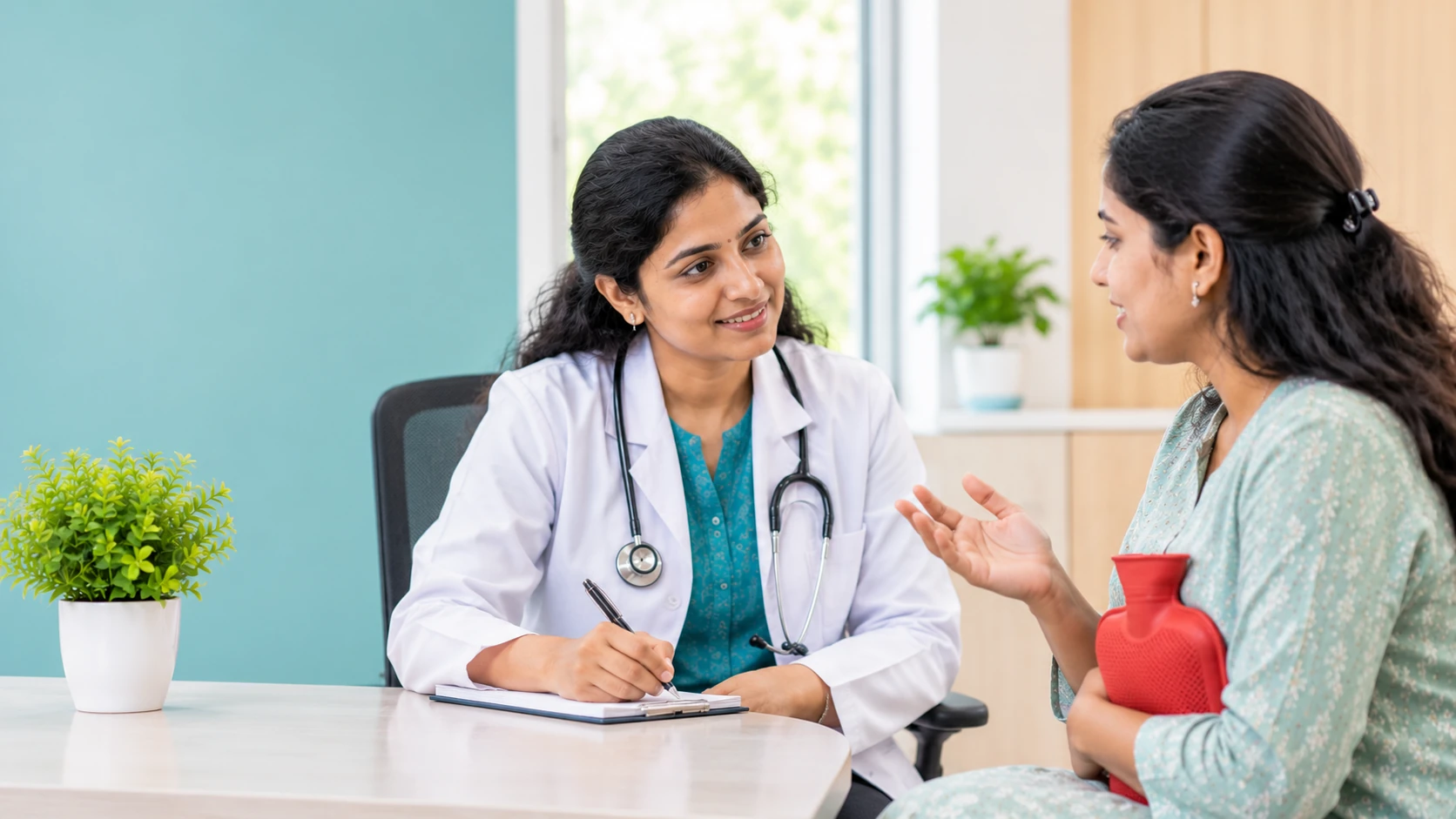
- Heat: a hot water bag or a heating pad on the lower abdomen or back is often as effective as a painkiller. A warm bath also helps
- Gentle movement: walking, stretching and yoga can reduce pain by improving blood flow and releasing endorphins
- Hydration and light meals: drink water and herbal teas, and eat small, regular meals. Limit very salty and processed foods
- Rest and sleep: pain feels worse when you are tired
- Abdominal massage: gentle circular strokes can ease cramps
- Warm drinks: ginger tea is a popular choice, and some women find it helpful, but the evidence is limited
- Reducing caffeine and alcohol: both can worsen cramping and anxiety in some women
- Stress care: deep breathing, meditation or a quiet break can lower pain perception
Regular, balanced meals with leafy vegetables, fruits, whole grains, nuts and enough protein support overall health. Some studies suggest that omega-3 fatty acids, magnesium, vitamin B1 and vitamin D may reduce period pain in some women, but evidence is mixed. Talk to your doctor before taking supplements, particularly if you are on other medicines or planning pregnancy. If you also have heavy periods, check for iron deficiency.
Anti-inflammatory medicines such as ibuprofen or mefenamic acid are the most useful for period pain because they block prostaglandins. They work best when you take them at the first sign of pain or even a day before the expected period, with food, for 2 to 3 days.
- Take them with food to protect the stomach
- Do not exceed the dose on the label or prescribed by your doctor
- Avoid them if you have stomach ulcers, kidney disease, asthma triggered by these medicines or a bleeding problem, unless your doctor agrees
- Paracetamol is an alternative if you cannot take an anti-inflammatory, though it is often less effective
- Do not rely on painkillers every month for months without a check. If you do need them regularly, see a doctor
For women whose pain is severe or who also need contraception, a gynecologist may suggest:
- Combined oral contraceptive pills: lighten periods and reduce prostaglandin production
- Progestin-only options: pills, an implant or a hormonal intrauterine system that reduce bleeding and pain
- Other medicines that suppress periods for a time in selected women
These are prescription treatments and need a medical check, since they are not suitable for everyone. Read how irregular or painful cycles are managed in our page on menstrual disorders.
See a gynecologist if you have:
- Pain that is getting worse each cycle, or that stops you from working, studying or sleeping
- Pain that does not respond to painkillers
- Very heavy bleeding, large clots or periods lasting over 7 days
- Pain between periods or during sex
- Pain that began after age 25 after years of easy periods
- Fever, foul-smelling discharge or pelvic pain, which could signal infection
- A missed period together with sharp pain, which could signal pregnancy problems
Conditions that can cause secondary dysmenorrhea include endometriosis, adenomyosis, fibroids and cysts and pelvic infection. A short, clear note of your pain pattern, in a diary, helps the doctor.
Your doctor will ask about your cycle, pain pattern and medical history, examine you and usually advise a pelvic ultrasound. Blood tests, an MRI or laparoscopy may be needed in some women, particularly when endometriosis is suspected. Our page on PCOS vs fibroids vs endometriosis helps you compare the conditions, and our guide to premenstrual syndrome (PMS) explains symptoms before the period.
The Obstetrics and Gynaecology department at Genesiss Hospital, BTM Layout, evaluates painful and heavy periods with a detailed history, examination and ultrasound, and offers medical and surgical treatment where needed. Dr. Divya J G and the team explain each option clearly. You can read about our care for irregular and heavy periods, learn why cycles change suddenly and explore the Obstetrics and Gynaecology department. Women visit us from Jayanagar, JP Nagar, Koramangala, HSR Layout and Bannerghatta Road.
For further reading, see the Mayo Clinic guide to menstrual cramps.
What is the fastest way to relieve period cramps?
Applying heat to the lower abdomen and taking an anti-inflammatory painkiller at the first sign of pain, with food, works well for most women. Gentle movement and rest also help.
Is it normal to have severe period pain?
Mild to moderate cramps are common. Severe pain that interferes with daily life is not something to simply accept, and it should be checked.
Which painkiller is best for period pain?
Anti-inflammatory medicines such as ibuprofen or mefenamic acid usually work best when taken early. Follow the label or your doctor's advice and avoid them if you cannot take them for medical reasons.
Can painful periods be a sign of endometriosis?
Yes. Pain that worsens over time, pain during sex or between periods and poor response to painkillers can point to endometriosis or adenomyosis.
Do birth control pills help with period cramps?
They can reduce pain and bleeding in many women, but they need a prescription and are not suitable for everyone.
Can exercise reduce period pain?
Regular exercise, even brisk walking or yoga, can lower the severity of cramps over time.
When should I see a gynecologist for period pain?
If the pain disrupts your life, is getting worse, comes with heavy bleeding or fever, occurs with sex or between periods or begins after age 25.
17, 100 Feet Ring Road, near Jayadeva Metro, BHBCS Layout, BTM 2nd Stage, BTM Layout, Bengaluru, Karnataka 560076.
Phone: +91 98867 77592 | Email: contact@genesisshospital.com
Emergency and trauma care are available round the clock.
Book an appointment | Contact us | Our doctors
This article is for general health information. It is not a substitute for examination, diagnosis or treatment by a qualified doctor. If you think you may have an emergency, go to the nearest emergency department or call the hospital.