Speciality Departments
Happy Patients
Expert Doctors
Emergency Care
Advanced Urology & Kidney Care
At Genesiss Hospital, we specialize in minimally invasive urological procedures. Our kidney care department is equipped with the latest diagnostic and surgical tools to ensure the best patient outcomes.
- ✓ Kidney Stone Laser Treatment (No Incisions)
- ✓ Prostate Care & Advanced Surgery
- ✓ Comprehensive Dialysis Services
"Our mission is to provide trusted, compassionate care using the latest medical breakthroughs."
Schedule Your Appointment
By submitting, you agree to our privacy policy.
Our Specialist
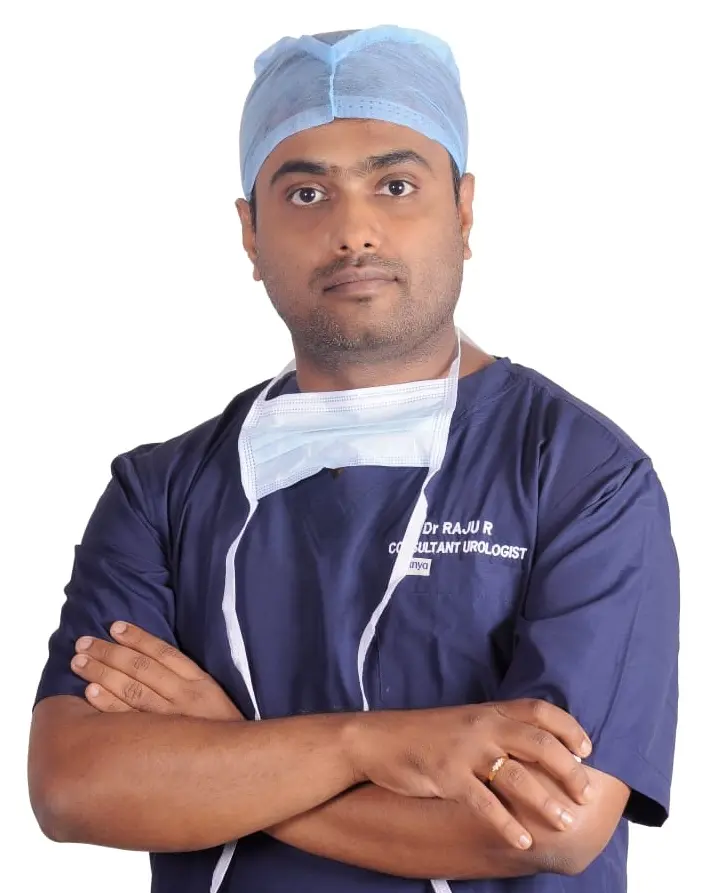
Dr. Raju
MBBS, MS, MCh (Urology) | Chief Consultant
Dr. Raju R is a highly experienced senior urologist in Bangalore with over 14+ years of expertise in advanced urology and andrology care. He has successfully performed 5000+ surgeries, specializing in kidney stone treatment, prostate care, and minimally invasive urological procedures. Known for his precision, patient-centric approach, and use of cutting-edge technology, Dr. Raju delivers safe, effective, and internationally aligned treatment outcomes.
Areas of Expertise
- Kidney Stone Treatment (ESWL, RIRS, PCNL)
- Laser Urology Procedures
- Prostate Treatment (BPH, TURP, Laser Surgery)
- Male Infertility & Andrology
- Urinary Tract Disorders
- Laparoscopic Urology Surgeries
Why Choose Dr. Raju R?
- 14+ Years of Experience in Urology.
- 5000+ Successful Surgeries.
- Expertise in Laser & Minimally Invasive Treatments.
- High Success Rate in Kidney Stone Removal
- Trusted Urologist in Bangalore
Advanced Technology & Treatment
Dr. Raju R is known for adopting the latest minimally invasive and laser technologies to ensure faster recovery and minimal pain. His expertise includes:
- • ESWL (Shock Wave Therapy): Non-surgical stone removal
- • RIRS (Laser Surgery): No-cut kidney stone treatment
- • PCNL: Advanced solution for large stones
- • Laser Prostate Surgery: Safe and effective treatment for enlarged prostate
His approach focuses on accurate diagnosis, personalized treatment planning, and faster patient recovery, making him one of the most trusted urologists in Bangalore.
Consult the Best Urologist in Bangalore
If you are experiencing kidney stones, urinary issues, or prostate problems, consult Dr. Raju R for advanced and effective treatment. Early diagnosis and the right care can prevent complications and ensure a quick recovery.PCOS vs Fibroids vs Endometriosis: Differences Explained
PCOS, fibroids, and endometriosis can all affect periods, fertility, and day-to-day comfort, but they are not the same condition. PCOS is mainly linked with hormones and irregular ovulation. Fibroids are usually non-cancerous growths in the uterus. Endometriosis is linked with tissue similar to the uterine lining growing outside the uterus.
The symptoms can overlap, which is why many women are told they have “hormonal issues” without getting a clear answer. Looking at the pattern of your periods, pain, bleeding, skin changes, and fertility concerns helps a gynaecologist understand what needs to be checked.
Why these conditions are often confused
A woman may have irregular periods, heavy bleeding, pelvic pain, bloating, acne, or difficulty getting pregnant. Those symptoms can lead to questions such as:
- Is it PCOS or endometriosis?
- Can fibroids cause irregular periods?
- Can I have PCOS and endometriosis together?
- Why are my periods both heavy and painful?
- Are these symptoms affecting my fertility?
The answer is not found in one symptom or one ultrasound report. These conditions affect different parts of reproductive health, so the diagnosis needs to look at the complete picture.
Painful or heavy periods should not be dismissed as something every woman simply has to tolerate.
What PCOS usually looks like
PCOS, or polycystic ovary syndrome, is a hormonal condition that can affect ovulation. When ovulation does not happen regularly, periods may become delayed, unpredictable, or absent.
Some women with PCOS may also notice acne, increased facial or body hair, scalp hair thinning, weight changes, or difficulty conceiving. Others may have only irregular periods.
The name can be confusing. PCOS does not mean that a woman simply has cysts in her ovaries. Small follicles can be seen on an ultrasound in women without PCOS too. A diagnosis is based on the overall pattern of periods, hormone-related symptoms, test results where needed, and other possible causes that must be ruled out.
If irregular cycles, acne, or excess facial hair are part of your concern, it may help to understand how PCOS is assessed before assuming that an ultrasound alone has the answer.
What fibroids usually look like
Fibroids are growths made from the muscle tissue of the uterus. They are usually non-cancerous. Some women have one fibroid, while others may have several. They may be very small or large enough to affect the shape of the uterus.
Many fibroids cause no symptoms at all. When they do cause problems, the pattern is often more related to bleeding and pressure than to acne or missed periods.
A woman with symptomatic fibroids may notice:
- Heavy bleeding or periods that last longer than usual.
- Passing large clots during periods.
- A feeling of heaviness or pressure in the lower abdomen.
- Frequent urination because of pressure on the bladder.
- Constipation or back discomfort in some cases.
- Pain or discomfort during sex.
- Tiredness and weakness from blood loss over time.
Fibroids can affect fertility in some women, particularly when their size or location changes the inside of the uterus. But having a fibroid does not automatically mean that pregnancy will be difficult.
What endometriosis usually looks like
Endometriosis happens when tissue similar to the lining of the uterus grows outside the uterus. It may be found around the ovaries, fallopian tubes, pelvic lining, bladder, or bowel.
The most important clue is often pain that follows the menstrual cycle. The pain may begin before a period, worsen during it, and continue after it ends. Some women describe it as cramps, while others describe deep pelvic pain, back pain, or pain that affects their ability to work, sleep, or carry on with normal life.
Endometriosis may cause:
- Severe period pain that is not controlled by usual measures.
- Pelvic pain outside the period as well.
- Pain during sex.
- Pain while passing stools or urine, especially around menstruation.
- Bloating, constipation, or loose motions that worsen around periods.
- Difficulty conceiving.
Not every woman with endometriosis has severe pain. Not every woman with severe pain has advanced endometriosis. The level of pain does not always reflect the extent of the condition.
The easiest way to understand the difference
PCOS is more likely to affect the timing of periods and ovulation. Acne, excess facial hair, scalp hair thinning, and weight-related concerns may also be part of the picture.
Fibroids are more likely to cause heavy bleeding, long periods, pelvic pressure, urinary frequency, or a feeling of fullness in the lower abdomen.
Endometriosis is more likely to cause severe cyclic pain, pain during sex, and bowel or bladder pain around periods.
There can still be overlap. A woman with PCOS can have heavy bleeding after a long gap between periods. A woman with fibroids can have painful periods. A woman with endometriosis may have heavy bleeding too. This is why symptoms guide the next step, but do not replace a diagnosis.
Can fibroids cause irregular periods?
Fibroids are more commonly linked with heavy or prolonged periods than with missed periods. If your periods are coming after long gaps, arriving unpredictably, or stopping for months, a hormone or ovulation-related cause such as PCOS may need to be assessed.
However, there is no rule that applies to every woman. Heavy and irregular bleeding can happen together, and a doctor may need to check the uterus, ovaries, hormones, and other possible causes.
Women who are regularly dealing with prolonged or heavy bleeding can explore more about menstrual concerns that need assessment.
Can you have PCOS, fibroids, and endometriosis together?
Yes, more than one condition can be present at the same time.
PCOS does not directly cause fibroids or endometriosis. Fibroids do not cause PCOS. But a previous diagnosis should not stop a woman from discussing symptoms that do not fit the original explanation.
For example, someone with PCOS may expect irregular periods but later develop very heavy bleeding or constant pelvic pressure. That needs evaluation for causes beyond PCOS. Similarly, a woman who has been told she has PCOS should not ignore severe period pain, pain during sex, or bowel symptoms that occur around menstruation.
A diagnosis should make your symptoms clearer, not make new symptoms easier to dismiss.
How each condition can affect fertility
PCOS may affect fertility because ovulation does not happen regularly. If an egg is not released consistently, it can be difficult to predict fertile days or conceive without support.
Fibroids may affect fertility depending on their number, size, and location. Many women with fibroids conceive naturally. Others may need treatment if a fibroid is affecting the uterine cavity or causing repeated problems.
Endometriosis may affect fertility through inflammation, scarring, adhesions, ovarian endometriomas, or changes around the fallopian tubes. But an endometriosis diagnosis does not mean pregnancy is impossible.
The best fertility plan depends on age, duration of trying, menstrual pattern, scan findings, partner evaluation where relevant, and the specific condition involved. It should not be based on online success stories or assumptions.
What tests help doctors tell the difference?
A good consultation starts with listening. The pattern of your periods often gives important information.
Your doctor may ask about:
- How many days your cycle usually lasts.
- Whether periods are delayed, missed, heavy, or prolonged.
- Whether pain starts before the period or only during it.
- Acne, facial hair growth, hair fall, or weight changes.
- Pain during sex.
- Bowel or bladder symptoms linked with periods.
- Whether you are trying to conceive.
- Previous pregnancies, surgeries, or family history.
An ultrasound may help identify fibroids and may show polycystic ovarian morphology in some women. But PCOS is not diagnosed by ultrasound alone.
Endometriosis can be more difficult to identify. A scan may show some forms of endometriosis, such as an ovarian endometrioma, but a normal ultrasound does not always rule it out. Further assessment, imaging, or surgery may be considered only when it is clinically appropriate.
Why treatment should not be the same for all three
PCOS care may focus on making periods more regular, improving metabolic health, addressing acne or excess hair growth, and supporting ovulation when pregnancy is a goal.
Fibroid care depends on whether the fibroid is causing significant bleeding, pain, pressure, anaemia, or fertility concerns. Some fibroids only need monitoring. Others may need medicines or a procedure.
Endometriosis care may include pain management, hormone-based treatment, fertility planning, or surgery in selected situations. Not every woman with endometriosis needs surgery, and not every woman with pain needs the same treatment.
The aim is not simply to control a symptom for a few months. It is to understand what is causing the symptom and choose a plan that fits your health and future pregnancy goals.
A consultation with Dr Divya J G
Many women wait because they are unsure whether their symptoms are serious enough. But you do not need to arrive with a diagnosis to ask for help.
Dr Divya J G is an Obstetrician and Gynaecologist, IVF Specialist, and Laparoscopic Surgeon at Genesiss Hospital. She evaluates menstrual concerns, PCOS, pelvic pain, fertility issues, and gynaecological conditions that may need medical or surgical care.
During a consultation, the goal is to make sense of the pattern. Is the main concern irregular ovulation, heavy bleeding from the uterus, or pain that suggests endometriosis? Is there one condition, or could more than one concern be present?
The Obstetrics and Gynaecology department can help guide that next step with a structured assessment instead of a one-size-fits-all treatment plan.
When should you see a gynaecologist?
It is worth arranging a consultation if you have:
- Periods that are repeatedly delayed, missed, or unpredictable.
- Bleeding that is heavy, prolonged, or affecting your work and daily routine.
- Period pain that makes you miss college, work, sleep, or social plans.
- Pelvic pain that continues outside your period.
- Pain during sex.
- Bowel or bladder discomfort that becomes worse around menstruation.
- Acne, facial hair growth, or hair thinning with irregular periods.
- Difficulty conceiving.
- A diagnosis that does not explain your current symptoms.
Seek urgent medical help if bleeding is very heavy, you feel faint or unusually weak, you have sudden severe pelvic pain, or you develop fever with pelvic pain.
Frequently Asked Questions
What is the difference between PCOS, fibroids, and endometriosis?
PCOS is mainly linked with hormones and irregular ovulation. Fibroids are usually non-cancerous growths in the uterus. Endometriosis involves tissue similar to the uterine lining growing outside the uterus. They may share symptoms but require different assessment and treatment.
Can PCOS be mistaken for endometriosis?
Some symptoms can overlap, especially fertility concerns and period problems. PCOS is more often linked with irregular cycles, acne, and excess hair growth. Endometriosis is more often linked with severe period pain, pelvic pain, painful sex, and bowel or bladder symptoms around periods.
Can I have PCOS and fibroids at the same time?
Yes. It is possible to have both PCOS and fibroids. PCOS does not directly cause fibroids, but each condition can affect menstrual health in a different way.
Can I have PCOS and endometriosis together?
Yes. A woman can have both conditions. A diagnosis of PCOS should not stop further evaluation if there is severe period pain, pain during sex, or pelvic pain that does not fit the usual PCOS pattern.
Can fibroids cause irregular periods?
Fibroids are more often linked with heavy or prolonged bleeding. PCOS is more commonly linked with delayed, missed, or unpredictable periods. A doctor may need to assess both hormonal and uterine causes when bleeding is irregular and heavy.
Do PCOS, fibroids, and endometriosis affect fertility?
They can affect fertility in different ways. PCOS may affect ovulation. Fibroids may affect the uterus depending on their size and location. Endometriosis may affect the ovaries, fallopian tubes, or pelvic environment. Many women can still conceive with the right evaluation and care.
How are PCOS, fibroids, and endometriosis diagnosed?
Diagnosis may involve menstrual history, examination, ultrasound, and blood tests when needed. PCOS is not diagnosed by ultrasound alone. Fibroids are often visible on ultrasound. Endometriosis may need further clinical assessment because it does not always show on a routine scan.
You do not have to work out on your own whether it is PCOS, fibroids, or endometriosis before asking for help. If your periods, pain, or fertility concerns are affecting your life, you can request a consultation with Dr Divya J G.
Your Path to Recovery
Consultation
Detailed discussion with our expert specialists.
Diagnosis
State-of-the-art testing for precise results.
Treatment
Advanced surgery or medical management.
Recovery
Personalized follow-up and rehab care.
Patient Success Stories
See what our patients have to say about their journey with us
Frequently Asked Questions
How do I book an appointment?

Do you accept medical insurance?
What are the visiting hours for inpatients?
Need medical care?
Book your appointment with our expert doctors in just a few clicks.

Why Choose Genesiss Hospital?
World-class healthcare tailored to your needs.
Expert Care
Led by the renowned Dr. Raju and his specialist team.
Advanced Tech
Latest diagnostic tools and surgical equipment.
5000+ Happy Patients
Providing compassionate care for over a decade.
24/7 Support
Emergency response and trauma care available round-the-clock.
Book an Appointment
Fill in the details below and we'll confirm your slot shortly.