Medically reviewed by: Dr. Mohan Ram, MBBS, MS (General Surgery), FIAGES, Consultant General Surgeon Last reviewed: 01 December 2026
A painful lump near the top of the buttock crease that oozes pus and makes sitting uncomfortable is often a pilonidal sinus. It is common in young adults, especially men with thick body hair, people who sit for long hours and those who are overweight. Many people delay seeing a doctor because the area is embarrassing, and the problem can then become a painful abscess. This guide to pilonidal sinus explains the symptoms, causes, treatment options, recovery and how to reduce the chance of it coming back.
Key points: A pilonidal sinus is a small tunnel or pit in the skin at the lower end of the spine, often containing hair. It can stay quiet for years and then flare as a painful abscess. An abscess needs drainage. A long-standing sinus usually needs a minor surgical procedure to heal for good. Recurrence is common without good aftercare, so hair control and hygiene matter.
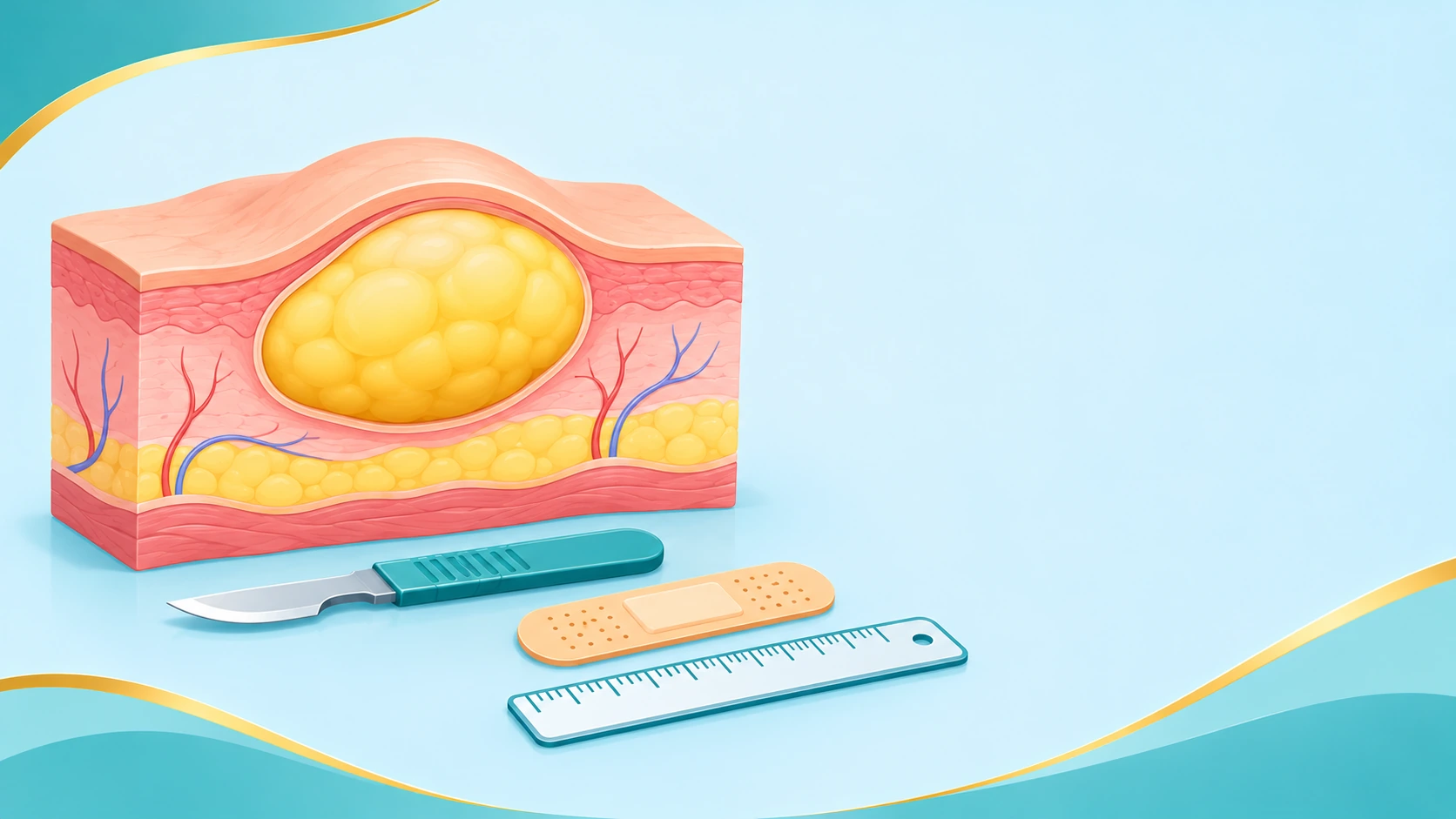
The word pilonidal comes from Latin words meaning a nest of hair. A pilonidal sinus is a small opening, or a few openings, in the skin of the natal cleft, the groove between the buttocks near the tailbone. Beneath the skin, a small channel or cavity forms, and it often contains hair and debris. The NHS pilonidal sinus guide describes it as a small hole in the skin that can become infected and form a painful abscess.
It is not a cyst in the strict sense, and it is not related to the bones of the spine. It is a skin and hair problem that is made worse by friction, pressure and sweat.
- A small dimple or pit in the skin near the tailbone, sometimes with hair poking out
- Pain or tenderness when sitting, or when pressing on the area
- Swelling, redness and warmth, a sign of infection
- Pus or blood-stained, foul-smelling fluid draining from the area
- Fever and a general feeling of being unwell when a large abscess forms
- Several openings in the skin, in long-standing disease
Some people have a sinus without symptoms and discover it by chance. Symptoms often begin suddenly with an abscess.
The exact cause is debated, but the commonly accepted explanation is that loose hairs penetrate the skin in the groove, and the body reacts to them as foreign material. Friction, sweating and pressure push the hair under the skin. Known risk factors include:
- Being male and aged between the late teens and the mid thirties
- Thick, coarse body hair
- Sitting for long periods, such as drivers, desk workers and gamers
- Obesity
- Poor hygiene or a deep natal cleft
- A family history
- Tight clothing and a sweaty, warm environment
| Feature |
Pilonidal abscess |
Chronic pilonidal sinus |
| Onset |
Sudden, over a day or two |
Gradual, over months to years |
| Main symptom |
Severe pain, a tender swelling, sometimes fever |
Intermittent discharge, mild pain, small pits |
| Skin |
Red, hot, tight |
Normal or slightly inflamed with openings |
| Treatment |
Drainage of the pus under local anaesthetic |
Planned minor surgery or other procedures |
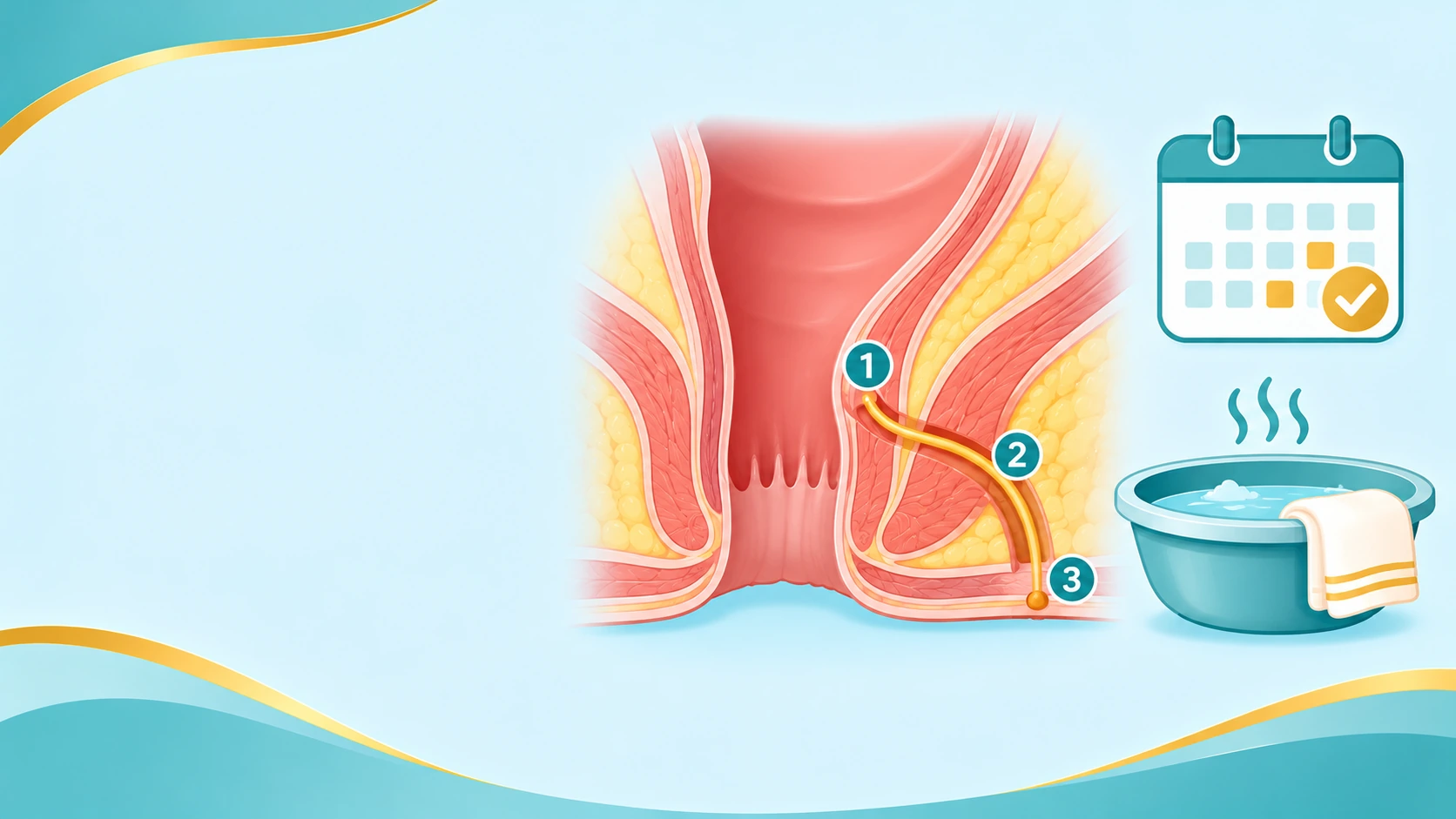
A doctor diagnoses a pilonidal sinus by examination. They look for pits, swelling, drainage and hair in the natal cleft, and check for signs of spreading infection. Tests are rarely needed. An ultrasound or MRI is used occasionally when the picture is unclear or the problem has recurred repeatedly. The condition can look like an anal fistula or a boil, so a proper examination matters. If you have a discharge close to the anus, read our guide to anal fistula.
Home care for a mild, non-infected sinus
- Keep the area clean and dry. Wash gently with warm water daily and pat dry
- Remove hair from the area regularly with a gentle method as advised by your doctor
- Avoid prolonged sitting, and take breaks to stand
- Do not squeeze or poke the area
Antibiotics
They are used when there is spreading infection or other risk factors, but they do not cure the sinus on their own.
Incision and drainage
A pilonidal abscess is treated by draining the pus. It is done under local anaesthetic in many cases, and it gives quick pain relief. The wound is cleaned and may be left open to heal from the inside. Drainage often relieves the abscess, but the sinus may remain and need further treatment.
Minimally invasive options
Several smaller procedures aim to remove the hair and diseased tissue through small openings, with quicker recovery and less pain. Examples include pit-picking and endoscopic or laser-based methods. They are suited to selected patients, and your surgeon will explain whether you qualify.
Surgical excision
For recurrent or complex disease, the surgeon removes the sinus and the surrounding diseased tissue. The wound may be left open to heal from the base or closed with a technique that flattens the cleft. Flap procedures are used for complex or recurrent disease. The choice depends on the size of the disease and your surgeon’s judgment.
- Local-anaesthetic procedures for an abscess usually allow a return to normal activity within days, with dressings
- Open wounds can take a few weeks to a few months to heal, and need regular dressing changes
- Hair removal around the area during healing, as advised, lowers the chance of recurrence
- Avoid sitting on hard surfaces for long, and use a soft cushion if needed
- Keep the wound clean, and follow the surgeon’s instructions on baths and dressings
Seek advice if you notice increasing pain, redness, fever, pus or a foul smell after treatment.
- Keep hair in the area short or removed, as advised
- Keep the area clean and dry, and shower after sweating
- Lose weight if you are overweight
- Take breaks from sitting, and avoid long periods in one position
- Wear breathable, loose clothing
- Follow up with your surgeon until the wound has healed fully
Recurrence rates are meaningful, especially after simple drainage alone. A planned procedure and good aftercare lower the risk.
See a doctor if you have a painful lump near the tailbone, repeated discharge, fever or a wound that does not heal. Go to a hospital urgently if the pain is severe, a large red swelling spreads or you have a fever, because a pilonidal abscess needs prompt drainage. If you have other swellings, see our guides on lipoma lumps under the skin and piles for how they differ.
The General Surgery department at Genesiss Hospital, BTM Layout, evaluates and treats pilonidal sinus, abscess drainage and recurrent disease, with discreet care and clear aftercare plans. Dr. Mohan Ram and the team explain each option. You can read about our general and emergency surgery services, the General Surgery department and our guide to choosing a general surgeon in BTM Layout. Patients visit from Jayanagar, JP Nagar, Koramangala, HSR Layout and Bannerghatta Road.
For further reading, see the MedlinePlus pilonidal sinus overview.
What is the main cause of a pilonidal sinus?
Loose hairs in the groove between the buttocks are driven under the skin by friction and pressure, and the body reacts to them. Sitting for long hours, thick hair and obesity raise the risk.
Can a pilonidal sinus heal on its own?
A very mild sinus can settle with good hygiene and hair control, but many keep recurring. An abscess needs drainage, and a long-standing sinus often needs a procedure.
Is pilonidal sinus surgery painful?
There is some pain and soreness for a few days, which is controlled with medicines. Dressings are needed for open wounds.
How long does it take to recover after pilonidal surgery?
It depends on the technique. Many people return to light work within days to two weeks, but full wound healing can take several weeks.
Can pilonidal sinus come back after surgery?
Yes, it can. Hair removal, hygiene, weight control and not sitting too long lower the risk.
Is pilonidal sinus the same as piles or fistula?
No. It is located near the tailbone and not at the anus, though an examination is needed to tell them apart.
Is pilonidal sinus dangerous?
It is not usually dangerous, but an untreated abscess can cause severe pain and infection. Rarely, long-standing disease can have complications, which is why a check is advised.
17, 100 Feet Ring Road, near Jayadeva Metro, BHBCS Layout, BTM 2nd Stage, BTM Layout, Bengaluru, Karnataka 560076.
Phone: +91 98867 77592 | Email: contact@genesisshospital.com
Emergency and trauma care are available round the clock.
Book an appointment | Contact us | Our doctors
This article is for general health information. It is not a substitute for examination, diagnosis or treatment by a qualified doctor. If you think you may have an emergency, go to the nearest emergency department or call the hospital.