Medically reviewed by: Dr. Vijay Reddy, MBBS, MS, Consultant General Surgeon Last reviewed: 02 December 2026
Sharp, cutting pain during or after passing stool, followed by a few drops of bright red blood on the paper, is the typical story of an anal fissure. It is a small tear in the lining of the anus. It is common, painful and very treatable, and many fissures heal within weeks with simple measures. People often assume that any bleeding at the back passage is piles and wait too long to see a doctor. This guide to anal fissure explains the symptoms, causes, treatment steps and when surgery is the right choice.
Key points: A fissure is a tear in the anal skin, usually from passing hard stool. Pain, bright red blood and a spasm of the anal muscle are the key features. Most acute fissures heal with a high-fibre diet, fluids, warm sitz baths and prescribed ointments. A fissure that lasts over 6 to 8 weeks is called chronic and may need a short procedure. Persistent bleeding needs a doctor’s check to exclude other causes.
An anal fissure is a small split or tear in the thin, moist tissue lining the anal canal. The NHS anal fissure guide describes it as a common problem that causes pain, and often bleeding, when passing stool. The pain triggers the ring of muscle around the anus, the sphincter, to tighten, which reduces blood flow to the tear and stops it from healing. This cycle of pain and spasm is why some fissures last for long.
- Sharp, burning or cutting pain during stools, which may last minutes to hours afterwards
- Bright red blood on toilet paper or on the surface of the stool
- Itching or irritation around the anus
- A visible tear or a small skin tag next to it in chronic cases
- Fear of passing stool, which leads to more constipation
- Hard, dry stools and straining, the most common cause
- Chronic constipation or repeated diarrhoea
- Childbirth in women
- Anal sex or injury
- Low-fibre diet and low fluid intake
- Conditions such as inflammatory bowel disease, in some people
- Tight anal sphincter muscle
| Feature |
Anal fissure |
Piles (haemorrhoids) |
| Main symptom |
Sharp, tearing pain with stools |
Often painless bleeding, lump or itching |
| Blood |
Small amount of bright red blood on paper |
Bright red blood dripping or splashing in the toilet |
| Pain |
Severe during and after stools |
Usually mild unless a clot forms |
| Cause |
Tear in the anal skin |
Swollen veins in the anal canal |
The two can occur together. Our guide to piles explains the other condition in detail.
An acute fissure is recent and usually heals within 4 to 6 weeks with simple care. A chronic fissure persists for more than 6 to 8 weeks, and may show deeper tissue, a skin tag or a hard edge. Chronic fissures are less likely to heal without extra treatment.
- Fibre: include vegetables, fruits, whole grains, oats, dal and psyllium husk (isabgol) as advised
- Fluids: drink enough water through the day
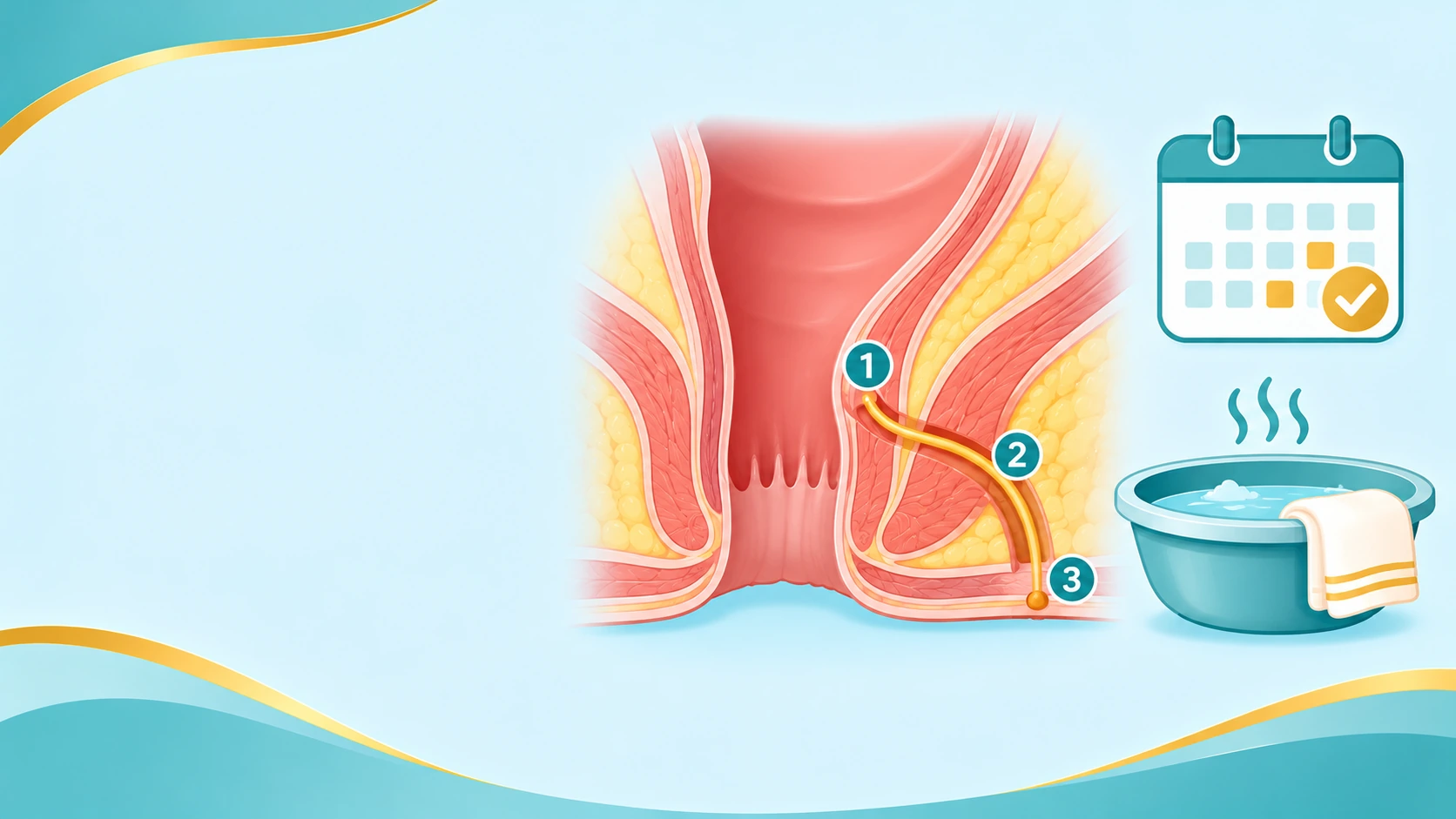
- Sitz baths: sit in warm water for 10 to 15 minutes after each stool and 2 to 3 times a day. It relaxes the sphincter and eases pain
- Do not strain or sit on the toilet for long, and respond to the urge to pass stool
- Gentle hygiene: pat dry and avoid rough tissue or scented wipes
- Stool softeners: your doctor may prescribe them
Your doctor may prescribe ointments that relax the sphincter and improve blood flow, such as a nitroglycerin ointment or a calcium channel blocker ointment, along with pain relief. These are used for several weeks and heal most fissures. Side effects, such as headache with some ointments, should be reported.
Botulinum toxin injection relaxes the sphincter for a few months and can help when ointments have failed. It carries a small risk of temporary incontinence.
If the fissure remains after medical treatment, a minor procedure is considered:
- Lateral internal sphincterotomy: a small cut in part of the internal sphincter muscle to lower the pressure at rest. It heals most fissures and gives quick pain relief. There is a small risk of minor leakage of gas or stool, which your surgeon will explain
- Fissurectomy or advancement flap: used in selected cases, for example when the sphincter pressure is already low
Surgery is usually a day-care procedure under anaesthesia. Most people return to work within a few days to a week.
- Continue fibre, fluids and sitz baths
- Take medicines as advised
- Expect a little spotting for some days
- Follow up to confirm healing
- Seek help for severe pain, fever, heavy bleeding or pus
See a doctor if you have rectal bleeding, severe pain with stool, symptoms lasting longer than 2 weeks, repeated episodes or weight loss and a change in bowel habits. Bleeding should never be assumed to be piles without examination, because other conditions, including growths, can cause it. If you notice a lump or swelling near the anus, read about anal fistula.
The General Surgery department at Genesiss Hospital, BTM Layout, examines and treats fissures, piles and other anorectal problems in a private setting. Dr. Vijay Reddy and the team offer medical treatment and day-care procedures. You can read about our general surgery services, the General Surgery department and our guide to choosing a general surgeon in BTM Layout. Patients visit from Jayanagar, JP Nagar, Koramangala, HSR Layout and Bannerghatta Road.
For further reading, see the Mayo Clinic anal fissure overview.
What is the main cause of an anal fissure?
Passing hard, dry stool or straining, which tears the lining of the anus. Chronic constipation and prolonged diarrhoea are common contributors.
How long does an anal fissure take to heal?
An acute fissure often heals in 4 to 6 weeks with fibre, fluids, sitz baths and ointment. A fissure lasting over 6 to 8 weeks is considered chronic.
Can an anal fissure heal without surgery?
Yes, most do with simple measures and ointments. Surgery is advised for a chronic fissure that does not heal.
Is blood in stool always piles?
No. Fissures, piles and other conditions can all cause bleeding. A doctor should examine you if it continues, especially after age 40.
Is fissure surgery safe?
Lateral internal sphincterotomy is widely used and usually effective. A small risk of temporary or minor leakage exists, which your surgeon will discuss.
What foods should I eat with an anal fissure?
Fibre-rich foods such as vegetables, fruits, oats, whole grains and dal, with plenty of water. Limit very spicy foods if they irritate you.
Can sitz baths help a fissure?
Yes. Warm water relaxes the anal muscle, relieves pain and improves healing. Use them for 10 to 15 minutes after stools.
17, 100 Feet Ring Road, near Jayadeva Metro, BHBCS Layout, BTM 2nd Stage, BTM Layout, Bengaluru, Karnataka 560076.
Phone: +91 98867 77592 | Email: contact@genesisshospital.com
Emergency and trauma care are available round the clock.
Book an appointment | Contact us | Our doctors
This article is for general health information. It is not a substitute for examination, diagnosis or treatment by a qualified doctor. If you think you may have an emergency, go to the nearest emergency department or call the hospital.