Medically reviewed by: Dr. Mohan Ram, MBBS, MS (General Surgery), FIAGES, Consultant General Surgeon Last reviewed: 25 October 2026
Piles, also called hemorrhoids, are one of the most common reasons adults visit a surgeon, and one of the least discussed. Many people live with bleeding, itching or a lump for months because of embarrassment, or try one ointment after another. The good news is that most piles can be managed, often without surgery, once you know the grade and cause. This guide explains how piles are graded, what treatment works at each stage, what recovery looks like, and which symptoms should never be assumed to be “just piles”.
Key points: Piles are swollen cushions of tissue and veins in the anal canal. Early piles often improve with fiber, water, toilet habits and medicines. Banding and other office procedures suit many grade 1 to 3 piles. Surgery is usually kept for larger or recurring piles. Blood in stool in a person over 40 to 45, or with weight loss or a change in bowel habit, needs a proper examination to rule out other conditions.
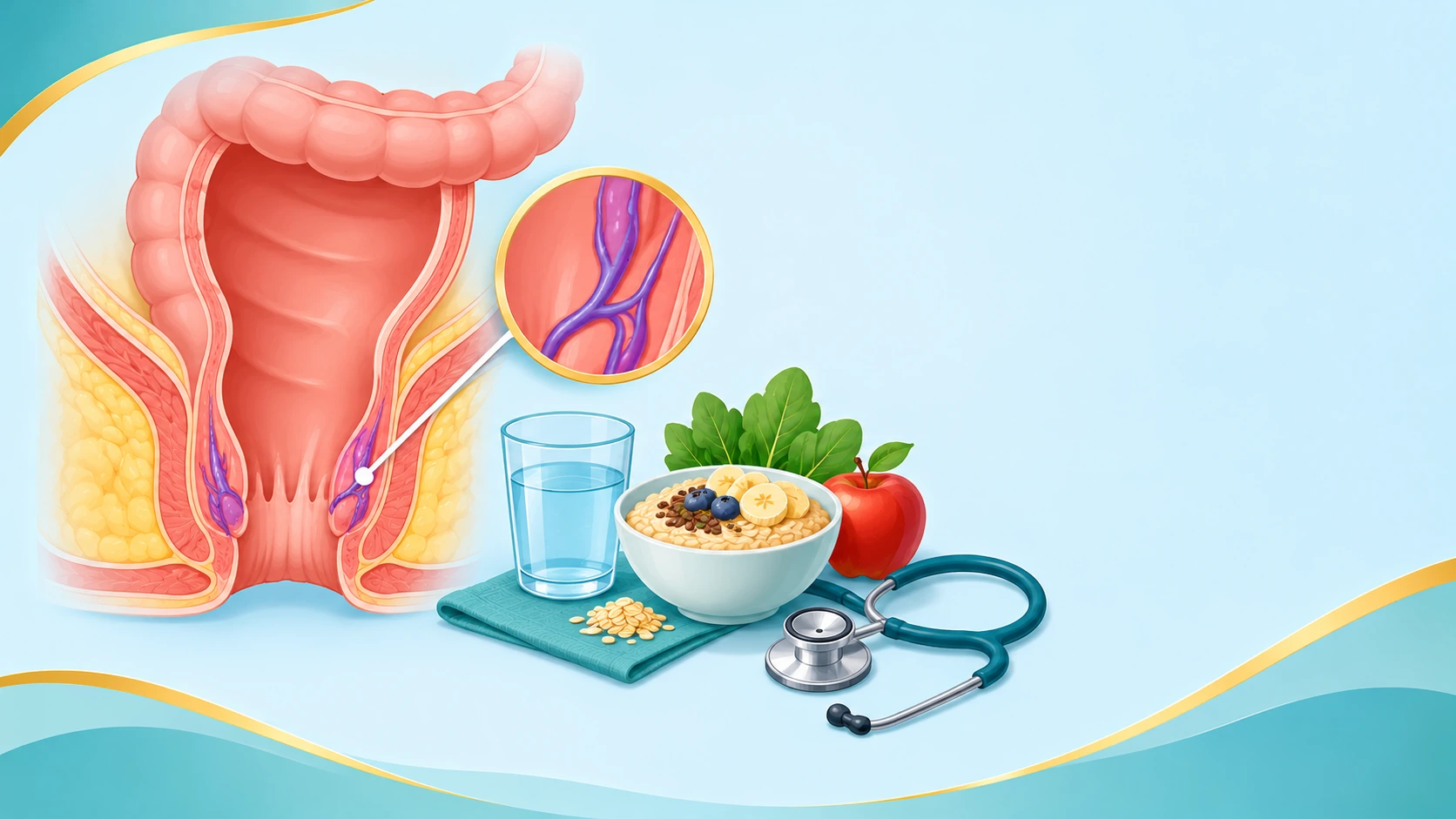
Everyone has soft cushions of blood vessels and tissue inside the anal canal. They help control stool. Piles develop when these cushions become swollen or slip down, usually from long-term straining, chronic constipation, diarrhea, sitting for long periods, pregnancy or being overweight.
- Internal piles form inside the anal canal. They are usually not painful but can bleed, and larger ones may come out during a bowel movement.
- External piles form under the skin around the anus. They can itch, swell and hurt, especially when a blood clot forms inside (a thrombosed pile).
Symptoms are similar in men and women, though pregnancy, childbirth and hormonal changes make piles more common in women.
- Bright red blood on tissue paper, in the toilet bowl or coating the stool, often without pain
- A soft lump or swelling near the anus
- Itching, irritation or a feeling of fullness
- Mucus discharge or a feeling that the bowel has not emptied
- Pain or a hard, tender lump (more typical of a thrombosed external pile)
Pain during bowel movements is more often caused by an anal fissure (a small tear), which is a different condition that needs a different approach.
| Grade |
What happens |
Typical symptoms |
| Grade 1 |
Swollen but stays inside |
Bleeding without a lump, usually without pain |
| Grade 2 |
Comes out during a bowel movement, then goes back in on its own |
Bleeding, mild lump, itching |
| Grade 3 |
Comes out and must be pushed back with a finger |
Lump, mucus, discomfort, bleeding |
| Grade 4 |
Stays outside and cannot be pushed back |
Persistent lump, pain, soiling, may clot |
The grade helps decide the treatment. Your surgeon will confirm it with a simple examination and, when needed, a proctoscope (a short tube with a light).
These steps help every stage and lower the chance of piles returning.
- Fiber: aim for about 25 to 30 grams a day from whole grains (jowar, ragi, oats, whole-wheat roti), dals, sprouts, vegetables, salads and fruits such as guava, papaya and apple. A teaspoon or two of isabgol (psyllium husk) in water at night helps many people.
- Water: drink enough to keep urine pale yellow, usually 2 to 3 liters a day unless your doctor has restricted fluids.
- Toilet habits: go when you feel the urge. Do not strain, and do not sit on the toilet scrolling a phone. Limit sitting to about 5 minutes.
- Movement: walk daily. Avoid sitting for hours without a break.
- Warm sitz bath: sit in plain warm water for 10 to 15 minutes, two or three times a day, to ease pain and itching.
Doctors may prescribe stool softeners, fiber supplements, flavonoid tablets, short courses of topical creams or suppositories, and pain relief for flare-ups. These ease symptoms and do not shrink large piles. Steroid-containing creams should not be used for long periods because they can thin the skin. Please do not self-medicate for weeks, because bleeding can have causes other than piles.
- Rubber band ligation: a small band is placed at the base of the pile so that it shrinks and falls off over a few days. It is done in the clinic without a hospital stay.
- Sclerotherapy: an injection that makes the pile shrink. It is mostly used for smaller piles.
- Infrared coagulation: a short heat pulse that reduces blood supply to the pile.
Some discomfort, a feeling of fullness and small amounts of bleeding are common for a few days afterwards. Piles can return, particularly if constipation continues.
Surgery is usually advised for grade 3 or 4 piles, large external piles, piles that keep returning, or piles that do not respond to other treatment. Options your surgeon may discuss include:
- Hemorrhoidectomy: surgical removal of the pile tissue. It is the most established operation and is done under anesthesia.
- Stapled hemorrhoidopexy: a stapling device lifts the prolapsed tissue back into place.
- Doppler-guided artery ligation: the blood supply to the piles is tied off using a probe.
- Laser hemorrhoidoplasty: a laser fiber is used to shrink the pile tissue.
Each method has benefits and limits. For example, hemorrhoidectomy can be uncomfortable for the first one to two weeks, while some newer techniques cause less early pain but may have a higher chance of the piles coming back. Evidence for laser treatment is still developing. Ask your surgeon which procedure suits your grade, the pros and cons, the chance of recurrence and what care you will need afterwards.
Laser treatment is often advertised as quick and “scar-free”, but no operation is entirely free of discomfort or risk. Laser is one option among several. It may suit selected grade 2 and 3 internal piles. It is not suitable for every pile, and recurrence can happen. A fair way to compare options is to ask about recovery time, the chance of recurrence, the cost and who will manage complications.
| Treatment |
Typical return to desk work |
Notes |
| Rubber band ligation |
1 to 2 days |
Mild discomfort, small bleeding for a few days |
| Stapled or Doppler-guided procedures |
About 1 week |
Often day-care or one night in hospital |
| Hemorrhoidectomy |
About 1 to 2 weeks |
Pain is managed with medicines, sitz baths and stool softeners; full healing takes a few weeks |
Whichever procedure you have, keep your stool soft, drink water, and follow your surgeon’s follow-up plan. Avoid heavy lifting for the period advised.
- Helpful: more fiber, water, regular toilet timing, sitz baths and short walks
- Occasionally helpful for comfort: a cold compress on a swollen external pile
- Not proven: many herbal pastes, oils and powders sold as quick fixes. Do not apply anything that burns or irritates. If a remedy has not helped within 1 to 2 weeks, see a doctor
Please see a doctor promptly if you have:
- Blood in stool that continues for more than a week or two
- Dark, black or mixed-in blood, or blood clots
- Weight loss, tiredness or a change in bowel habit that lasts more than 2 to 3 weeks
- Severe pain, a hard tender lump or fever
- A lump that cannot be pushed back
- Any bleeding after age 40 to 45 that has not been examined, because colon and rectal conditions can look similar to piles
The General Surgery department at Genesiss Hospital examines patients with piles and related anorectal problems, explains the grade, and discusses medicine, procedure and surgical options that suit your condition. Your surgeon will tell you which of these options are appropriate and available. The hospital is at 17, 100 Feet Ring Road, near Jayadeva Metro, BHBCS Layout, BTM 2nd Stage, Bengaluru 560076, and patients also visit from Jayanagar, JP Nagar, Koramangala, HSR Layout and Bannerghatta Road. You can read about our General Surgery department or call +91 98867 77592 to book a consultation. If you have a lump that is also leaking pus, read our guide to anal fistula.
Which treatment is suitable for piles?
There is no single option that suits everyone. Early piles often improve with diet, water and toilet habits. Procedures such as banding suit many grade 1 to 3 piles, and surgery is kept for larger or recurring piles. Your surgeon will recommend a treatment based on the grade, symptoms and your health.
Can piles go away without surgery?
Many grade 1 and grade 2 piles improve with fiber, fluids, medicines and better toilet habits. Piles can return if constipation or straining continues.
Which medicine is used for piles?
Doctors commonly prescribe stool softeners, fiber supplements, flavonoid tablets and short courses of creams or suppositories. They relieve symptoms but do not remove large piles. Use them under medical advice.
Are piles dangerous?
Piles are usually not dangerous, but bleeding should never be assumed to be piles without an examination, especially after age 40 to 45, because other conditions can cause similar bleeding.
What are piles symptoms in females?
The same as in men: bright red bleeding, a lump, itching or discomfort. Pregnancy, childbirth and constipation make piles more common in women.
How long does recovery take after piles surgery?
It depends on the procedure. After banding, most people return to work in a day or two. After hemorrhoidectomy, many need 1 to 2 weeks, and complete healing takes a few weeks.
Is laser surgery for piles better than normal surgery?
Laser is one of several options. It may suit selected piles, but it is not suitable for all and recurrence is possible. The right choice depends on the grade, your health and your surgeon's assessment.
How can I prevent piles?
Eat a fiber-rich diet, drink enough water, avoid straining, limit time on the toilet, exercise regularly and treat constipation or diarrhea early.
17, 100 Feet Ring Road, near Jayadeva Metro, BHBCS Layout, BTM 2nd Stage, BTM Layout, Bengaluru, Karnataka 560076.
Phone: +91 98867 77592 | Email: contact@genesisshospital.com
Emergency and trauma care are available round the clock.
Book an appointment | Contact us | Our doctors
This article is for general health information. It is not a substitute for examination, diagnosis or treatment by a qualified doctor. If you think you may have an emergency, go to the nearest emergency department or call the hospital.