Medically reviewed by: Dr. Divya J G, MBBS, MS (OBG), DNB, FMAS, FRM, Consultant Obstetrician and Gynaecologist Last reviewed: 23 October 2026
Ovulation is the moment an ovary releases an egg, and it is the single most important event in a month when you are trying to conceive. The egg lives for only about 12 to 24 hours, so timing matters. Many women ask: how do I know when I am ovulating? Your body gives several signals, though none is fully reliable on its own. This guide explains the signs, the methods to track them, what the fertile window is and when to ask a doctor for help.
Key points: Ovulation usually happens about 12 to 16 days before your next period, not always on day 14. Common signs are clear, stretchy cervical mucus, mild one-sided pelvic pain and a rise in basal body temperature after ovulation. The fertile window is about 6 days, ending on the day of ovulation. If your cycles are irregular or you have been trying for 12 months (6 months if over 35), see a doctor.
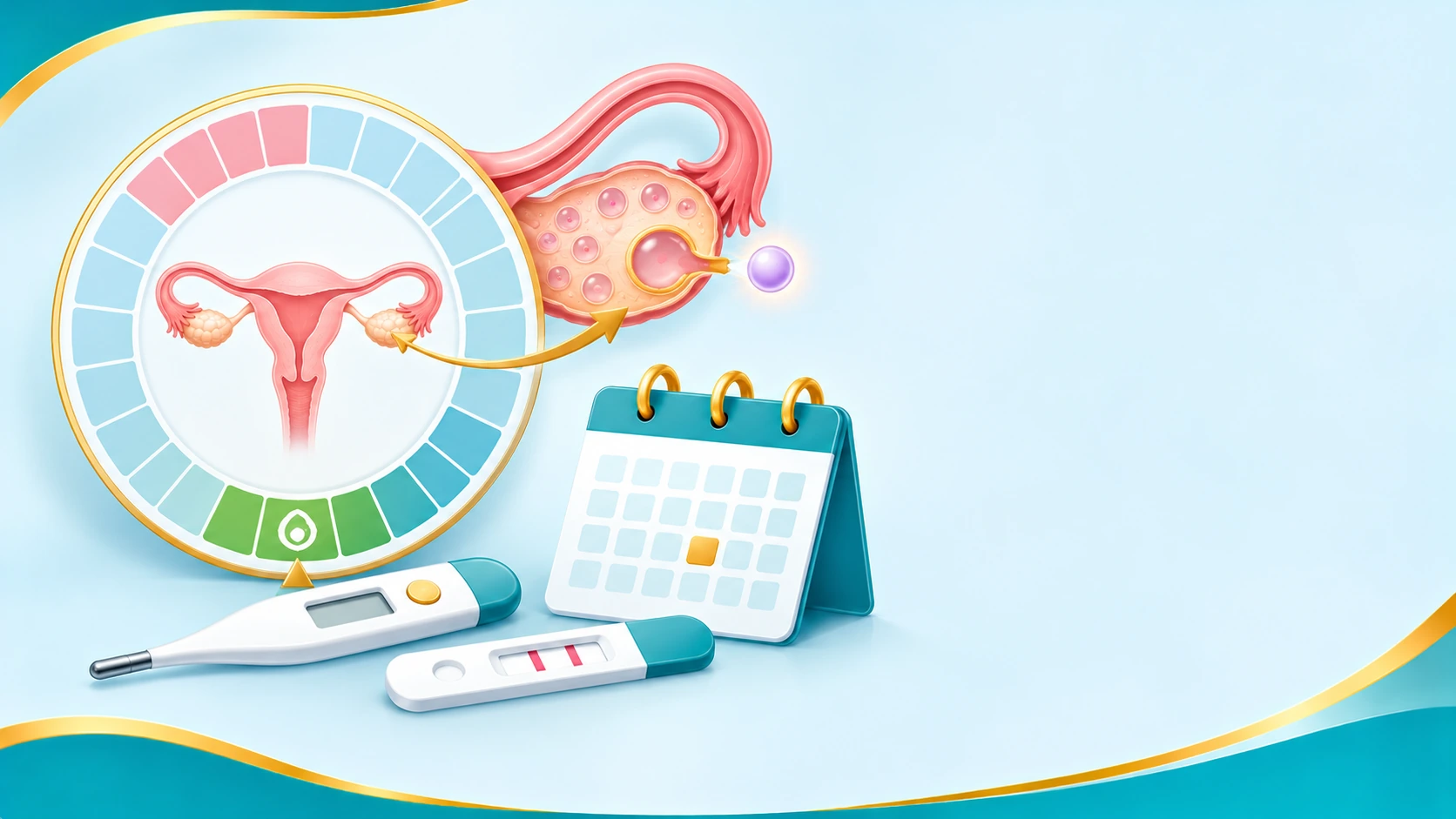
Each month, hormones prompt one follicle in an ovary to mature and release an egg. The egg travels into the fallopian tube, where it can be fertilized by sperm. If it is not fertilized, it dissolves, and the uterine lining is shed about two weeks later as a period.
Ovulation happens roughly 12 to 16 days before the next period starts. In a regular 28-day cycle, this is around day 14. But cycles vary:
| Cycle length |
Likely ovulation day |
Likely fertile window |
| 28 days |
Around day 14 |
Days 9 to 14 |
| 32 days |
Around day 18 |
Days 13 to 18 |
| 35 days |
Around day 21 |
Days 16 to 21 |
Count day 1 as the first day of full bleeding. These are estimates. Stress, illness, travel and weight changes can shift ovulation by days.
Sperm can survive for up to 5 days in the female reproductive tract, and the egg for about a day. Pregnancy is most likely if intercourse happens in the 5 days before ovulation and on the day of ovulation. Intercourse every 1 to 2 days during this window is a practical approach.
Before ovulation, mucus becomes clear, slippery and stretchy, like raw egg white, and the amount increases. After ovulation, it turns thicker, sticky or dry. This is one of the most reliable natural signs.
Some women feel a mild twinge or ache on one side of the lower belly around ovulation, lasting from a few hours to a day or two. Pain that is severe, lasts longer or comes with fever or vomiting needs a medical check.
A small amount of light pink or brown spotting around the middle of the cycle can happen due to the hormone shift. If bleeding is heavy or frequent, tell your doctor.
- A rise in sex drive
- Breast tenderness
- Mild bloating
- A heightened sense of smell or taste
- Slight increase in energy in some women
Not every woman notices every sign, and the absence of signs does not mean you are not ovulating.
| Method |
How it works |
Pros |
Limits |
| Calendar method |
Estimate from past cycle lengths |
Free, simple |
Unreliable if cycles are irregular |
| Cervical mucus |
Note daily mucus changes |
Free, shows the approach of ovulation |
Takes practice, affected by infection or medicines |
| Basal body temperature |
Take your temperature on waking each day. A rise of about 0.2 to 0.5 degrees Celsius after ovulation |
Confirms that ovulation occurred |
Shows ovulation after it happens, so cannot predict it |
| Ovulation test kits (urine LH strips) |
Detect the LH surge 24 to 36 hours before ovulation |
Predicts ovulation |
Can mislead in PCOS, where LH may be high throughout. Cost over months |
| Ultrasound follicle monitoring |
Scans track the growth of the main follicle |
Direct, accurate, shows whether the follicle ruptures |
Needs clinic visits |
Many women combine two methods, such as the mucus and an ovulation kit. Do not rely on phone apps alone, especially with irregular periods.
- Start testing a few days before the expected fertile window, based on your cycle length.
- Test at the same time each day, usually afternoon, after limiting fluids for a couple of hours.
- A test line as dark as or darker than the control line shows an LH surge. Ovulation is expected in about 24 to 36 hours.
- Have intercourse that day and the next.
If your cycles vary by more than 7 to 9 days, or are longer than 35 days, ovulation is harder to predict. Home kits and temperature charts may be confusing. An ultrasound follicle study done by a doctor can show whether you are ovulating and when. Irregular cycles can have causes such as PCOS, thyroid disease, high prolactin, stress or weight changes. Read about ovulation disorders and about irregular periods and PCOS.
- Have intercourse every 1 to 2 days during the fertile window, instead of timing a single day
- Start folic acid (400 micrograms a day) before conception, as advised by your doctor. See our preconception checkup guide
- Maintain a healthy weight, exercise regularly and sleep well
- Avoid smoking and limit alcohol and caffeine
- Do not use lubricants that may affect sperm. Ask your doctor if you need one
- Ask the male partner to review smoking, alcohol, heat exposure and supplements
See a doctor if your periods are very irregular, shorter than 21 days or longer than 35 days; you have no periods for 3 months; you have severe pelvic pain with ovulation; you are under 35 and have not conceived after 12 months of trying; you are 35 or older and have not conceived after 6 months. Earlier assessment is sensible if you have known PCOS, thyroid disease or endometriosis.
The Fertility team at Genesiss Hospital, BTM Layout, offers consultation, ovulation assessment and ultrasound follicle monitoring when it is clinically needed. We are at 17, 100 Feet Ring Road, near Jayadeva Metro, BHBCS Layout, BTM 2nd Stage, Bengaluru 560076, and women visit from Jayanagar, JP Nagar, Koramangala, HSR Layout and Bannerghatta Road. Call +91 98867 77592 or see our Male and Female Infertility and IVF department page.
What are the first signs of ovulation?
Clear, stretchy cervical mucus like raw egg white is often the first sign. Some women also notice mild one-sided pelvic pain, light spotting, breast tenderness or increased sex drive.
On which day do I ovulate?
Roughly 12 to 16 days before your next period. In a 28-day cycle that is about day 14, but in a 32-day cycle it is closer to day 18.
How long does ovulation last?
The egg lives for about 12 to 24 hours after release. The fertile window, including the sperm survival time, is about 6 days.
Can I ovulate without symptoms?
Yes. Many women have no noticeable signs. Lack of symptoms does not mean you are not ovulating.
Do ovulation test kits work in PCOS?
They can be misleading, because women with PCOS may have high LH levels without ovulating. An ultrasound follicle study gives a more reliable answer.
Is spotting in the middle of the cycle normal?
Light pink or brown spotting around ovulation is common and usually harmless. See a doctor if bleeding is heavy, frequent or painful.
How often should we have intercourse to conceive?
Every 1 to 2 days during the fertile window is a practical approach, which covers the days before and the day of ovulation.
17, 100 Feet Ring Road, near Jayadeva Metro, BHBCS Layout, BTM 2nd Stage, BTM Layout, Bengaluru, Karnataka 560076.
Phone: +91 98867 77592 | Email: contact@genesisshospital.com
Emergency and trauma care are available round the clock.
Book an appointment | Contact us | Our doctors
This article is for general health information. It is not a substitute for examination, diagnosis or treatment by a qualified doctor. If you think you may have an emergency, go to the nearest emergency department or call the hospital.