Medically reviewed by: Dr. Divya J G, MBBS, MS (OBG), DNB, FMAS, FRM, Consultant Obstetrician and Gynaecologist Last reviewed: 17 October 2026
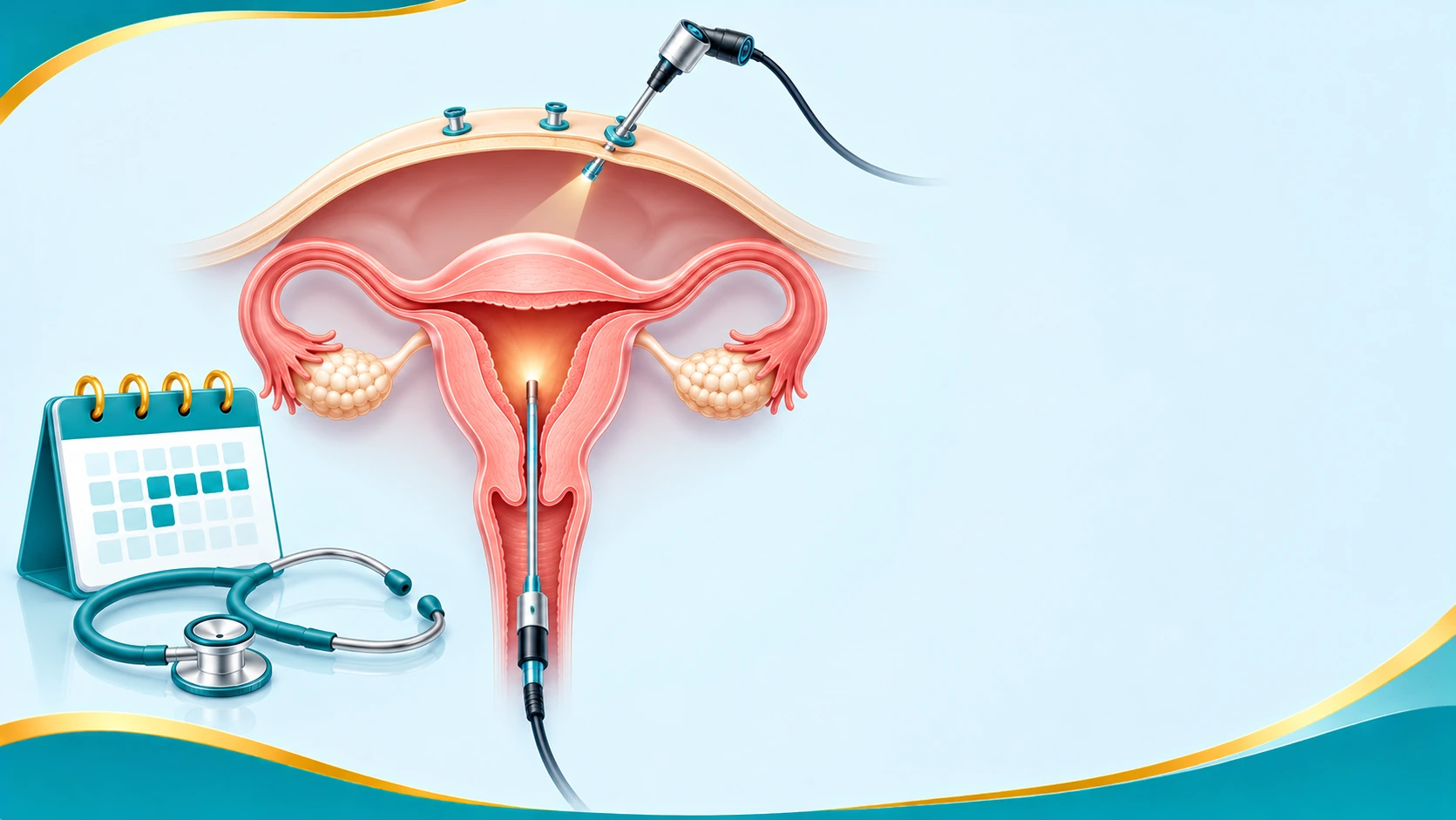
Some causes of infertility cannot be seen on a blood test or an ultrasound scan. A scarred uterus, a small polyp, tissue from endometriosis or adhesions around the tubes may need a direct look. Hysteroscopy and laparoscopy are two keyhole techniques that let the doctor do exactly that, and often treat the problem at the same time. They are not needed by every couple trying to conceive. This guide explains when they are advised, what they involve, what recovery looks like and the risks.
Key points: Hysteroscopy looks inside the uterus through the cervix, with no cuts on the abdomen. Laparoscopy looks at the outside of the uterus, tubes and ovaries through small cuts in the abdomen under general anesthesia. They are usually advised after basic tests suggest a possible problem, and are not routine for every couple. Recovery is usually quick, and many return to desk work within a week.
|
Hysteroscopy |
Laparoscopy |
| What it looks at |
Inside of the uterine cavity |
Outside of uterus, tubes, ovaries and pelvis |
| How it enters |
Through the vagina and cervix |
Through small cuts on the abdomen |
| Typical anesthesia |
Local, sedation or general |
General |
| What it can find or treat |
Polyps, fibroids inside the cavity, septum, scar tissue (adhesions), thin lining issues |
Endometriosis, adhesions, blocked or fluid-filled tubes, ovarian cysts, fibroids, dye test of the tubes |
| Duration |
10 to 30 minutes |
30 to 90 minutes |
The two are often done together in one sitting, so the doctor can examine the entire reproductive tract.
Doctors generally recommend these procedures when basic tests point to a possible problem:
- An abnormal HSG or ultrasound suggesting a polyp, fibroid, septum, scar tissue or a blocked tube. See our guide on the HSG test
- Suspected endometriosis, with pelvic pain or painful periods and difficulty conceiving
- A known or suspected pelvic infection or previous surgery with likely adhesions
- Fluid-filled tubes (hydrosalpinx), particularly before IVF
- A history of repeated miscarriages or failed implantation with suspected uterine problems
- Unexplained infertility in some selected cases, after other tests and discussion
Guidelines do not recommend laparoscopy as a routine test for all couples. If your basic tests, including a normal HSG and ultrasound, are reassuring and you have no pelvic pain, your doctor may advise treatment without surgery.
- Polyps and submucosal fibroids can be removed
- A uterine septum (a wall dividing the cavity) can be cut
- Scar tissue (Asherman’s syndrome) can be released
- The uterine lining can be assessed and biopsied when needed
- Endometriosis: deposits can be seen, removed or treated, and cysts on the ovary can be removed
- Adhesions around the tubes and ovaries can be cut
- Hydrosalpinx: a blocked, fluid-filled tube can be removed or blocked before IVF, as your doctor advises
- Chromopertubation: dye is passed through the tubes to see whether they are open
- Ovarian cysts and fibroids can be removed in selected cases
- Ovarian drilling may be considered in selected women with PCOS who do not respond to medicines. It is used much less often now
- Your doctor will explain why it is advised and what you can expect
- Tests such as blood count, blood group, infection screen, ECG and an anesthetic check are usually done
- Hysteroscopy is usually scheduled after your period and before ovulation, when the lining is thin
- You will be told when to stop eating and drinking
- Tell your doctor about medicines, allergies and previous surgery
- Plan a few days off and someone to accompany you
- You are given general anesthesia and are asleep during the procedure.
- For laparoscopy, a small cut is made near the navel, gas is gently introduced to lift the abdominal wall and a thin camera is inserted. One or two other tiny cuts allow instruments.
- The surgeon examines the uterus, tubes, ovaries and pelvis, and may do the dye test.
- For hysteroscopy, a thin camera is passed through the cervix to look inside the uterus, and small instruments are used if a problem is found.
- The instruments are removed, the gas is released, and the small cuts are closed with stitches or glue.
| Time |
What to expect |
| Same day or next day |
Home after recovery from anesthesia. Sleepiness, mild belly pain, shoulder-tip pain from the gas |
| 2 to 3 days |
Cramping and light spotting. Rest, walk gently, take medicines as advised |
| About 1 week |
Many people return to desk work. Stitches are usually dissolvable |
| 1 to 2 weeks |
Wound checks. Avoid heavy lifting and strenuous exercise as advised |
| Next cycle |
Your doctor will advise when to resume intercourse and when to attempt conception |
Contact the hospital if you have a fever, severe or increasing abdominal pain, heavy bleeding, pus or redness at a wound, repeated vomiting or difficulty passing urine.
All procedures carry risk. For hysteroscopy and laparoscopy, these include bleeding, infection, injury to the uterus, bowel, bladder or blood vessels (uncommon), reactions to anesthesia, a need to convert to open surgery in rare cases and the possibility that a problem is not completely solved. Your surgeon will discuss the specific risks for you at the time of consent.
The cost depends on whether the procedure is diagnostic or operative, whether hysteroscopy and laparoscopy are combined, the type of anesthesia, the hospital stay, pre-operative tests and any additional treatment such as cyst removal. To get the charges at Genesiss Hospital after your consultation, call +91 98867 77592.
The findings guide the next step. If a blocked tube or hydrosalpinx is found, your doctor may discuss tubal surgery, IVF or other options. After removal of polyps or scar tissue, your doctor will discuss timing for trying to conceive, and sometimes medicines to help the lining recover. See our pages on uterine abnormalities treatment and fallopian tube blockage treatment.
The Infertility and Gynecology departments at Genesiss Hospital, BTM Layout, discuss whether these procedures are needed, based on your history and test results, and explain the plan in detail before any procedure. We are at 17, 100 Feet Ring Road, near Jayadeva Metro, BHBCS Layout, BTM 2nd Stage, Bengaluru 560076, and couples visit from Jayanagar, JP Nagar, Koramangala and HSR Layout. See the Male and Female Infertility and IVF department page or call +91 98867 77592.
When is laparoscopy advised for infertility?
When tests suggest a problem that needs a direct look or treatment, such as suspected endometriosis, tubal blockage, adhesions, fluid-filled tubes or pelvic pain. It is not a routine test for everyone.
What is the difference between hysteroscopy and laparoscopy?
Hysteroscopy looks inside the uterus through the cervix. Laparoscopy looks at the outside of the uterus, the tubes and ovaries through small cuts in the abdomen.
Is laparoscopy done under general anesthesia?
Usually yes, so you are asleep. Hysteroscopy may be done with local anesthesia, sedation or general anesthesia depending on whether it is diagnostic or operative.
How long is recovery after laparoscopy for infertility?
Many people go home the same or next day and return to desk work in about a week. Shoulder-tip pain from the gas settles in a few days.
When can we try to conceive after laparoscopy or hysteroscopy?
It depends on what was done. Your doctor will advise, often from the next cycle or after a short waiting period if surgery was extensive.
Is the dye test during laparoscopy different from HSG?
Yes. In laparoscopy, dye is passed through the tubes while the doctor watches them directly (chromopertubation). HSG uses X-ray images through the cervix.
Does laparoscopy always lead to pregnancy?
No. It can find and treat certain problems, but pregnancy depends on many factors including age, sperm quality and ovulation.
17, 100 Feet Ring Road, near Jayadeva Metro, BHBCS Layout, BTM 2nd Stage, BTM Layout, Bengaluru, Karnataka 560076.
Phone: +91 98867 77592 | Email: contact@genesisshospital.com
Emergency and trauma care are available round the clock.
Book an appointment | Contact us | Our doctors
This article is for general health information. It is not a substitute for examination, diagnosis or treatment by a qualified doctor. If you think you may have an emergency, go to the nearest emergency department or call the hospital.