Medically reviewed by: Dr. Divya J G, MBBS, MS (OBG), DNB, FMAS, FRM, Consultant Obstetrician and Gynaecologist Last reviewed: 24 October 2026
Being told you may need a hysterectomy, the surgical removal of the uterus, can bring a rush of questions. Is it necessary? Are there alternatives? Will I go into menopause? How long will I be off work? In many women, the operation can now be performed through small cuts using a camera, known as laparoscopic or keyhole surgery. This guide explains when a hysterectomy is advised, what the laparoscopic approach involves, what recovery looks like and how to make an informed decision.
Key points: A hysterectomy is permanent. After it, periods stop and pregnancy is not possible. It is considered when medicines and less invasive treatments have not worked or are not suitable. The laparoscopic method generally means smaller scars, less pain and a quicker return to routine than open surgery. Keeping the ovaries means that menopause is not triggered immediately. A second opinion is reasonable.
A hysterectomy removes the uterus (womb). It may also include the cervix, fallopian tubes and sometimes the ovaries, depending on the reason for surgery.
| Type |
What is removed |
Notes |
| Total hysterectomy |
Uterus and cervix |
Most common |
| Subtotal (supracervical) hysterectomy |
Uterus, cervix kept |
Selected women |
| Hysterectomy with salpingectomy |
Uterus and fallopian tubes |
Sometimes done to lower the risk of tubal conditions |
| Hysterectomy with oophorectomy |
Uterus, tubes and ovaries |
Leads to surgical menopause if both ovaries are removed |
| Approach |
How |
General points |
| Laparoscopic |
Several small cuts and a camera. The uterus is detached and removed through the vagina |
Smaller scars, less pain, shorter stay, quicker recovery. Needs a trained laparoscopic surgeon |
| Vaginal |
Through the vagina with no abdominal cut |
Suitable when the uterus is small and mobile, or with prolapse |
| Open (abdominal) |
One larger cut on the lower abdomen |
Used for very large uterus, extensive scarring or suspected cancer in some cases |
Terms such as total laparoscopic hysterectomy (TLH) and laparoscopic-assisted vaginal hysterectomy (LAVH) describe how much of the surgery is done through the camera and how much through the vagina. Your surgeon will choose the method that suits your anatomy and condition.
- Fibroids causing heavy bleeding, pain or pressure when other treatments are not suitable. See our page on fibroids and ovarian cysts
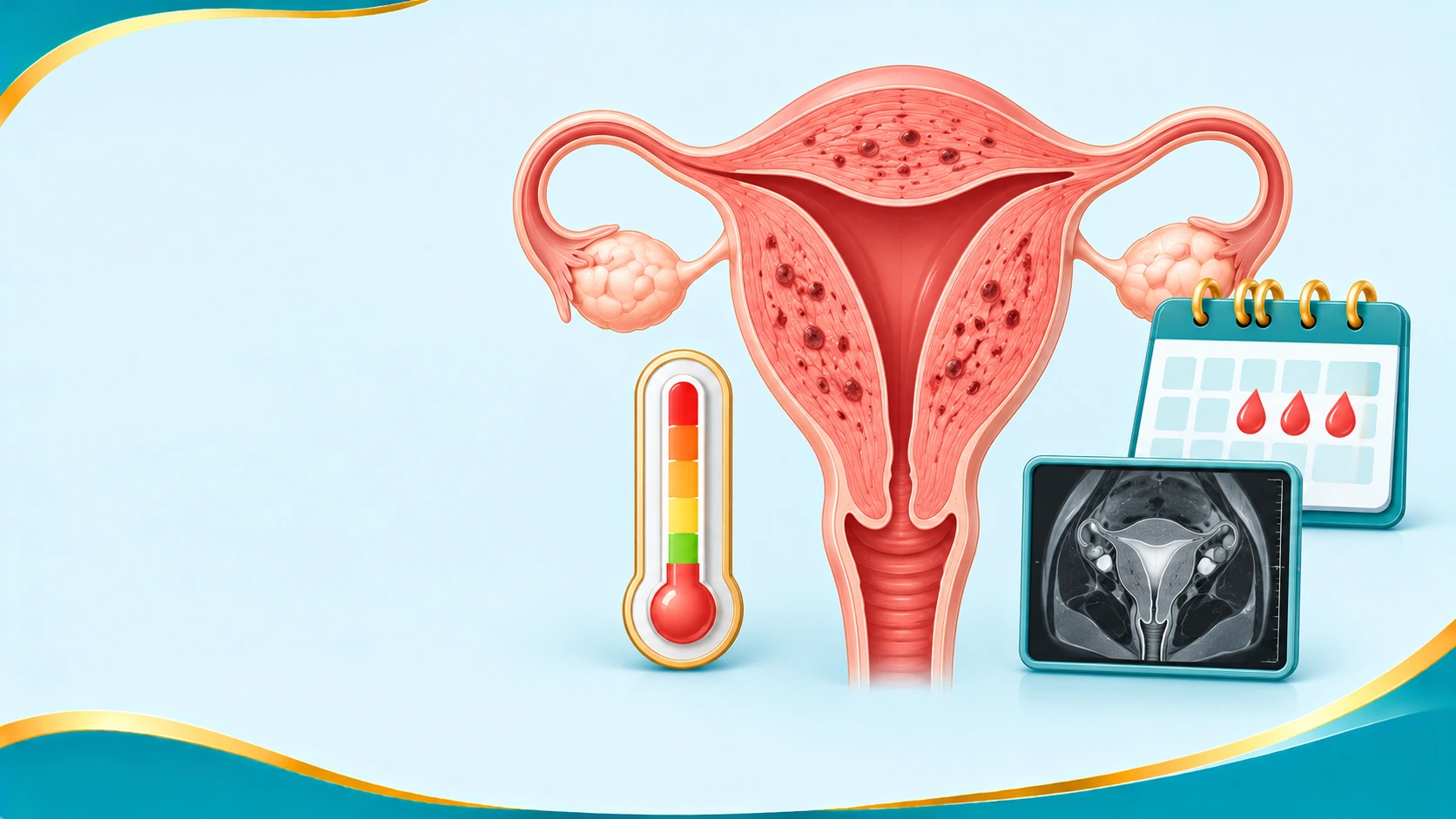
- Adenomyosis, where the uterine lining grows into the muscle. See our guide to adenomyosis
- Heavy menstrual bleeding that does not respond to medicines or other procedures
- Endometriosis with severe pain, when other treatments have failed
- Uterine prolapse (often with a vaginal approach)
- Abnormal cells or early cancers of the uterus or cervix, which need specialist planning
- Chronic pelvic pain due to a uterine cause
For many conditions, other treatments exist and are worth discussing:
| Option |
For |
| Medicines (tranexamic acid, hormonal pills, pain relief) |
Heavy periods, pain |
| Hormonal intrauterine device |
Heavy bleeding, adenomyosis symptoms |
| Hysteroscopic procedures |
Polyps, some fibroids, endometrial treatments |
| Myomectomy (removing fibroids, keeping the uterus) |
Fibroids, especially if you want to keep fertility |
| Uterine artery embolization |
Selected fibroids and adenomyosis |
| Hormone-suppressing treatment |
Endometriosis, adenomyosis |
A hysterectomy is a definitive treatment. If you may want a pregnancy, or you are unsure, discuss alternatives and consider a second opinion.
- A clinical examination, ultrasound and sometimes an MRI
- A Pap smear and, if needed, an endometrial biopsy to rule out other conditions
- Blood tests, including hemoglobin. Anemia should be treated before surgery
- Control of blood pressure, sugar and thyroid
- An anesthetist check, and a chest X-ray or ECG if advised
- Instructions on fasting and which medicines to stop
- Counseling on the effects on periods, fertility, hormones and intimacy
- You are given general anesthesia.
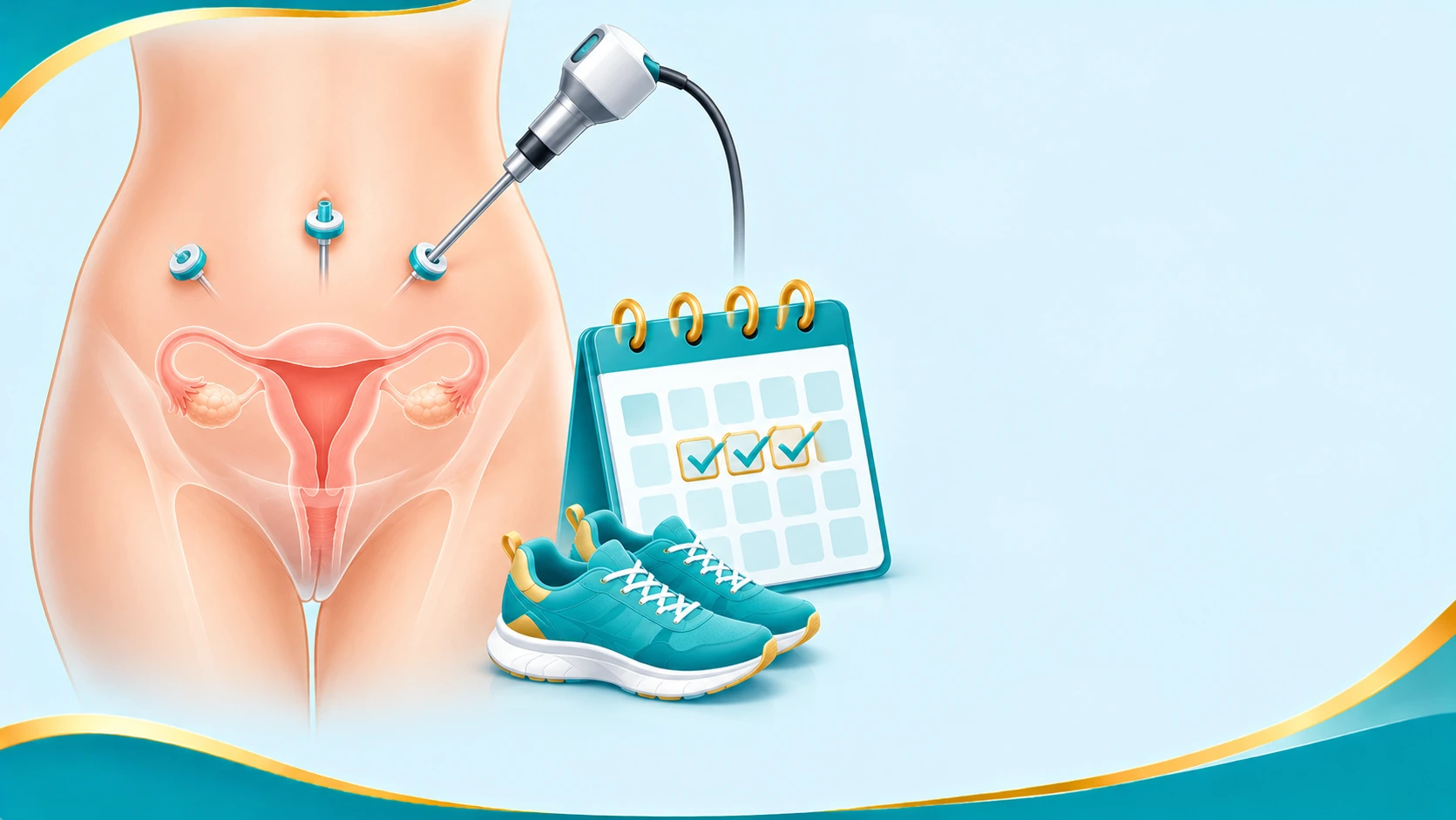
- Small cuts (about 0.5 to 1.2 cm) are made, usually 3 or 4, including one near the navel. The abdomen is gently filled with carbon dioxide gas to create space.
- A camera and fine instruments are inserted. The surgeon frees the uterus from its attachments and seals the blood vessels.
- The uterus is removed, usually through the vagina. If the uterus is large, it may be removed in a protective bag in smaller pieces, with the most suitable method chosen for your condition.
- The upper end of the vagina is closed with stitches, the gas is released and the small cuts are closed.
The operation takes about 1 to 2.5 hours, depending on the size of the uterus and the condition being treated.
| When |
What to expect |
| Same day |
Walking with help within hours. Mild to moderate pain, shoulder-tip pain from the gas, light vaginal spotting |
| Hospital stay |
Usually 1 to 2 days |
| First 2 weeks |
Rest, short walks, light household activity. Avoid lifting anything heavy |
| 2 to 4 weeks |
Many women return to desk work at about 2 to 3 weeks. Spotting may continue |
| 4 to 6 weeks |
Gradually increase activity. Avoid heavy lifting and strenuous exercise as advised |
| About 6 to 8 weeks |
Intercourse and tampons usually resume after your doctor confirms the upper vagina has healed |
Recovery varies. Women who had open surgery, a very large uterus or other health issues may need longer. Your surgeon will give personalized advice.
Call your surgeon or go to the hospital if you have fever, heavy vaginal bleeding (soaking more than one pad an hour), severe or worsening abdominal pain, a swollen, red or draining wound, pain or swelling in a calf, chest pain or breathlessness, vomiting that does not settle, or difficulty passing urine.
All surgery carries risks. These can include bleeding, infection, injury to the bladder, ureter or bowel (uncommon), blood clots in the legs or lungs, problems at the upper end of the vagina, a need to convert to open surgery, anesthetic risks and, if the ovaries are removed, early menopause. Your surgeon will explain how these apply to your case.
- If the ovaries are kept, they continue to make hormones, so menopause is not triggered immediately. In some women, menopause may happen slightly earlier than otherwise
- If both ovaries are removed before menopause, menopausal symptoms begin soon after surgery. Your doctor will discuss options, including hormone treatment, if appropriate
- Periods: they stop
- Pregnancy: not possible after the uterus is removed
- Sexual life: most women resume a normal sex life after healing. Some notice improvement because pain and bleeding have stopped, while a few notice changes in sensation or desire. Share your concerns with your doctor
- Weight and mood: a hysterectomy does not cause weight gain by itself. Recovery, reduced activity and life changes can. Mood changes should be discussed with your doctor
- Pelvic floor: continue pelvic floor exercises. Read our guide to pelvic floor exercises
The cost depends on the type of hysterectomy, the size of the uterus, whether ovaries or tubes are removed, the surgeon’s fees, the anesthetic, operating room and room charges, tests, medicines and the length of stay. Insurance may cover surgery for medical indications, so check with your insurer. To get the charges at Genesiss Hospital after your consultation, call +91 98867 77592.
- Why do you recommend a hysterectomy for me, and what are the alternatives?
- Is the laparoscopic approach suitable for my uterus?
- Will my ovaries and tubes be removed or kept?
- What are the risks in my case?
- How long will I be in hospital, and how long before I can resume work and normal life?
- What follow-up will I need?
The Obstetrics and Gynecology department at Genesiss Hospital, BTM Layout, evaluates women with fibroids, adenomyosis, heavy bleeding and related conditions, and discusses medical, minimally invasive and surgical options. Whether hysterectomy is appropriate is decided after a thorough assessment. We are at 17, 100 Feet Ring Road, near Jayadeva Metro, BHBCS Layout, BTM 2nd Stage, Bengaluru 560076, and women visit from Jayanagar, JP Nagar, Koramangala, HSR Layout and Bannerghatta Road. See our Obstetrics and Gynecology department page or the page on irregular and heavy periods.
What is a laparoscopic hysterectomy?
It is surgery to remove the uterus through small cuts using a camera and fine instruments, instead of one large abdominal cut.
How long is the recovery after laparoscopic hysterectomy?
Most women stay 1 to 2 days in hospital and return to desk work in about 2 to 3 weeks. Full recovery and return to heavy activity usually take 4 to 6 weeks or longer.
Is laparoscopic hysterectomy better than open surgery?
For many women it means smaller scars, less pain, a shorter hospital stay and faster recovery. Open surgery may still be advised for some conditions. Your surgeon will recommend the most suitable method for you.
Will I go into menopause after a hysterectomy?
Not immediately if your ovaries are kept, though menopause may come slightly earlier in some women. If both ovaries are removed before menopause, symptoms begin soon after.
Are there alternatives to hysterectomy?
Yes, depending on the condition. They include medicines, a hormonal intrauterine device, hysteroscopic treatment, myomectomy, uterine artery embolization and hormone treatments. Discuss them before deciding.
What are the side effects of uterus removal?
Immediate effects include pain, spotting and tiredness. Longer-term, periods stop and pregnancy is not possible. If ovaries are removed, menopausal symptoms occur. Most women recover well and return to normal activities.
When can I have sex after a hysterectomy?
Usually after 6 to 8 weeks, once your doctor confirms that the upper end of the vagina has healed.
17, 100 Feet Ring Road, near Jayadeva Metro, BHBCS Layout, BTM 2nd Stage, BTM Layout, Bengaluru, Karnataka 560076.
Phone: +91 98867 77592 | Email: contact@genesisshospital.com
Emergency and trauma care are available round the clock.
Book an appointment | Contact us | Our doctors
This article is for general health information. It is not a substitute for examination, diagnosis or treatment by a qualified doctor. If you think you may have an emergency, go to the nearest emergency department or call the hospital.