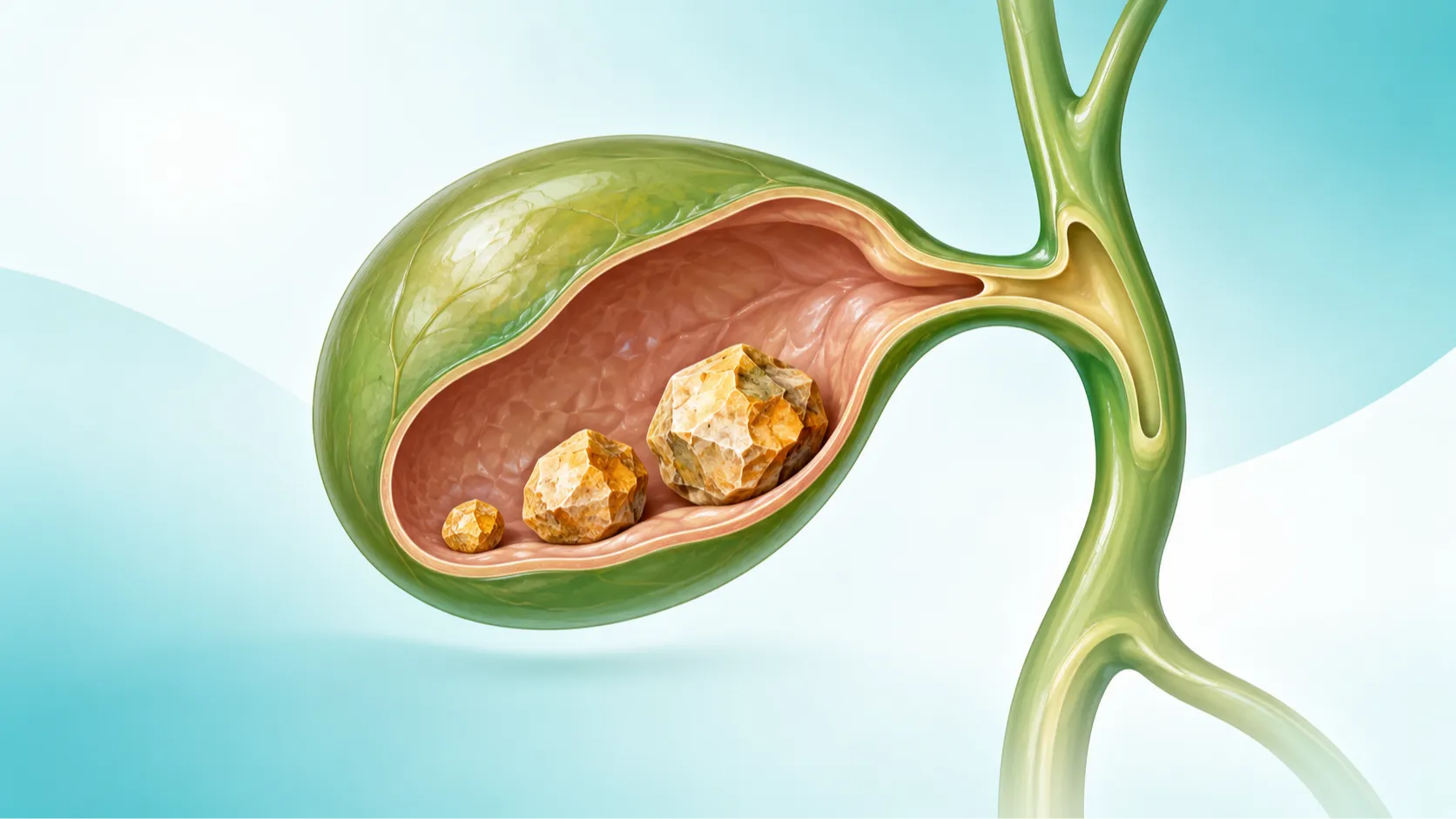
Quick answer: There is no single “dangerous” size for a gallbladder stone, because symptoms and complications matter more than size alone. As a general guide, large stones (over 20 mm) are watched more closely because of a higher chance of long-term inflammation, while even small stones (under 5 mm) can slip into the bile duct and cause a blockage. Surgery is usually recommended when stones cause repeated pain, inflammation or a blockage, and not from a scan measurement alone.
If you have recently been told you have gallstones, one of the first things you probably want to know is which size of gallbladder stone is dangerous, and whether yours falls into that category. It is a fair question, but the honest answer is that stone size is only one part of a bigger picture. This guide explains, in plain language, how size generally relates to risk, which symptoms are worth paying attention to, and when surgery is typically discussed versus simply keeping an eye on things. None of this is meant to diagnose your specific case. Only your doctor can do that, after reviewing your imaging and examining you directly.
The gallbladder is a small, pear-shaped organ tucked under the liver that stores bile, a fluid that helps digest fat. Gallstones form when substances in bile, mainly cholesterol or a pigment called bilirubin, harden into solid deposits. Stones can be as small as a grain of sand or as large as a golf ball, and a person can have one large stone or dozens of tiny ones at the same time.
Many people carry gallstones for years without knowing it, because a stone that stays still and does not block anything typically causes no symptoms at all. This is why gallstones are often discovered by accident, during an ultrasound done for an unrelated reason. The NHS overview of gallstones and the NIDDK guide to gallstone symptoms and causes cover the basics in more detail.
In general medical terms, larger gallstones and stones that cause blockage or repeated pain are the ones doctors tend to watch more closely, but size alone does not tell the whole story. The gallbladder stone size chart below is a general educational reference, not a diagnostic tool.
| Stone size |
Common label |
What doctors generally think about |
| Under 5 mm |
Small stones |
Can slip out of the gallbladder into the narrow bile duct and cause a blockage, so they are not automatically harmless |
| About 5 mm to 20 mm |
Medium stones |
The range in which many symptomatic gallstones fall, often linked to the classic pain after fatty meals |
| Over 20 mm |
Large or “giant” stones |
Less likely to travel into the bile duct, but linked in general medical literature with a higher chance of chronic gallbladder inflammation, so closer monitoring or earlier discussion of surgery may be advised |
These are sometimes considered more likely to slip out of the gallbladder and into the narrow bile duct, where they can potentially cause a blockage. This is why even small stones are not automatically dismissed as harmless.
This is the size range in which many symptomatic gallstones fall, often associated with the classic pattern of pain after fatty meals.
Larger stones are generally less likely to travel into the bile duct simply because of their size, but they have been associated in medical literature with a higher likelihood of chronic gallbladder inflammation over time. Some studies also link very large stones, such as those above 3 cm, with a higher risk of gallbladder cancer. This is one reason doctors may recommend closer monitoring or discuss surgery earlier for larger stones, even when symptoms are mild.
It is worth repeating that this gallbladder stone size chart is a general educational guide, not a personal risk assessment. A small stone causing repeated blockages can be more clinically significant than a large stone sitting quietly with no symptoms. Your surgeon will look at your stone’s size, number and location and, most importantly, your actual symptoms, before forming an opinion on your specific case.
Regardless of what size your stones are, certain symptoms are generally considered worth prompt medical attention rather than a wait-and-watch approach:
- Sudden, intense pain in the upper right or central abdomen, sometimes spreading to the right shoulder or back
- Pain that comes on after eating, particularly fatty or fried food
- Nausea or vomiting alongside abdominal pain
- Fever or chills, which can suggest infection or inflammation
- Yellowing of the skin or eyes (jaundice), which can indicate a blocked bile duct
- Pale stools or dark urine
If you experience sudden, severe abdominal pain, fever or jaundice, this generally warrants urgent medical evaluation rather than waiting to see if it passes on its own. Our guide to severe abdominal pain and when it is an emergency lists the warning signs in detail. If you are unsure whether your burning or upper abdominal discomfort is gallbladder related or acidity, see chest burning or acidity: when should you get checked. To work out which specialist to see, read abdominal pain: which doctor should you consult.
Doctors usually start with your symptoms and a physical examination. An abdominal ultrasound is the most common test and shows stones, their size and number, and signs of gallbladder inflammation. Blood tests, including liver function tests, can show whether a stone is blocking the bile duct. If a duct stone is suspected, further imaging such as an MRI scan of the bile ducts or a CT scan may be advised.
Broadly speaking, doctors tend to discuss gallbladder removal (cholecystectomy) when stones are:
- Causing repeated symptomatic episodes
- Linked to an episode of acute gallbladder inflammation
- The cause of a blockage somewhere in the biliary system
Silent gallstones, meaning stones found incidentally with no symptoms at all, are often simply monitored, particularly if they are small. Your doctor may weigh this differently depending on your overall health, family history and other individual factors.
| Situation |
What usually happens |
| Stones found by chance, no symptoms |
Often monitored, with advice on what symptoms to watch for |
| Repeated pain after meals |
Surgery is commonly discussed |
| Gallbladder inflammation (cholecystitis) |
Hospital assessment, and surgery is commonly advised |
| Blocked bile duct, jaundice, pale stools or dark urine |
Urgent assessment and treatment |
| Very large stones, even with few symptoms |
Closer follow-up, and earlier discussion of surgery may be appropriate |
This decision is never made from a stone’s size on a scan alone. It is based on a combination of your symptoms, how often they occur, what your imaging shows, your overall health and your doctor’s clinical judgment after a full examination.
If surgery is recommended, it is typically performed laparoscopically in suitable patients. You can read more about how this procedure works, along with recovery expectations, on our gallbladder and biliary surgery treatment page and our gallbladder surgeries page. If you are researching what the procedure might cost, our gallbladder and appendix surgery cost in Bangalore guide gives a general price range. Worried about what comes after? See what happens if your gallbladder is removed.
Some patients with no symptoms are simply monitored. Medicines that dissolve certain small cholesterol stones exist, but they work slowly, are suitable only for selected patients and stones can return after treatment stops. For people with symptoms, removing the gallbladder is the usual long-term solution. Your surgeon can tell you whether any non-surgical option is reasonable for you. The NIDDK treatment guide for gallstones gives a neutral overview.
Which size of gallbladder stone is dangerous?
No single size is dangerous on its own. Stones over 20 mm are watched more closely because of a higher chance of chronic inflammation, while stones under 5 mm can slip into the bile duct and block it. Symptoms, blockage and repeated episodes matter more than size. A doctor should assess your scan and symptoms together.
Does the size of a gallstone always determine how dangerous it is?
No. Size is one factor among several, including whether the stone causes blockage, how often it triggers symptoms and your overall health. A small stone that repeatedly blocks the bile duct can be more concerning than a larger, silent one. Only a doctor, after reviewing your imaging and symptoms, can assess your individual risk.
At what size should gallstones be removed?
There is no fixed size at which every gallstone must be removed. Surgery is usually recommended when stones cause repeated pain, inflammation or a blockage. Very large stones may prompt an earlier discussion about surgery even with mild symptoms. The decision combines symptoms, imaging, general health and your surgeon's judgment.
Can gallstones dissolve or pass on their own without surgery?
Some very small stones can occasionally pass without intervention, and some patients with no symptoms are managed with monitoring alone. Whether monitoring or surgery is right for you depends on your specific situation, and this should be decided with your doctor rather than assumed from general information online.
What are the symptoms of a gallstone attack?
Typical signs are sudden, intense pain in the upper right or central abdomen that may spread to the right shoulder or back, often after a fatty meal, sometimes with nausea or vomiting. Fever, chills, yellowing of the skin or eyes, pale stools or dark urine need urgent medical attention.
How urgently should I see a doctor if I think I have gallstone symptoms?
If you have mild, occasional discomfort after fatty meals, a routine consultation is generally reasonable. If you have sudden, severe pain, fever, or yellowing of the skin or eyes, this is generally considered a reason to seek prompt medical care rather than waiting.
Can you live a normal life after gallbladder removal?
Yes, most people do. The liver continues to make bile, which flows straight into the small intestine. Some people have looser stools or discomfort after very fatty meals for a short time. Read our guide on life after gallbladder removal.
If you have been diagnosed with gallstones, or you are experiencing symptoms that concern you, do not try to self-assess based on stone size alone. Book a consultation with the general surgery team at Genesiss Hospital, BTM Layout, Bangalore, so your specific case can be properly evaluated and you can understand the right next steps. You can also meet our surgeons, including Dr. Niranjan G R and Dr. Vijay Reddy, or read about our general surgery department.
This article is for general education and is not a diagnosis. Only a doctor who has reviewed your scans and examined you can advise on your treatment.