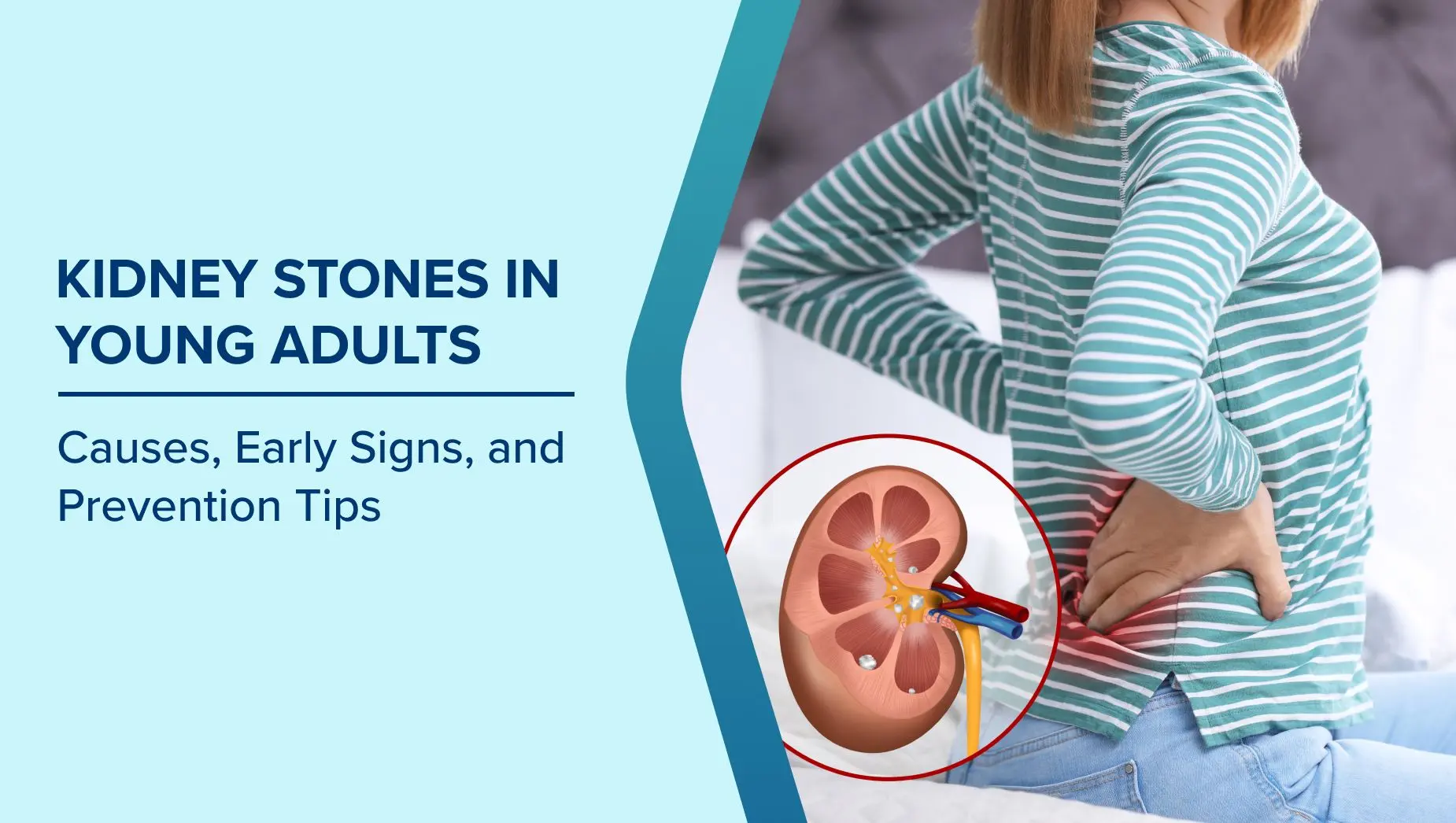
At Genesiss Multispeciality Hospital, our expert Urology team treats a rising number of young adults experiencing kidney stones. Changes in diet, lifestyle, hydration, and stress levels have made kidney stones more common in people aged 18–35. Understanding the causes, early signs, and preventive strategies helps protect long-term kidney health and reduces the chances of recurrence.
Kidney stones are hard deposits of minerals and salts formed inside the kidneys. They can range from tiny crystals to large stones that block the urinary tract, causing severe pain.
In young adults, factors like poor hydration, processed foods, excess protein, and sedentary habits contribute significantly to stone formation.
-
Poor Dietary Habits
High salt intake, junk food, and sugary beverages increase mineral buildup in urine.
-
Inadequate Hydration
Drinking less water makes urine concentrated, promoting crystal formation.
-
High Animal Protein Diet
Excess chicken, meat, eggs increase uric acid levels, a major stone-forming component.
-
Sedentary Lifestyle
Lack of exercise affects metabolism and calcium balance in urine.
-
Hormonal or Metabolic Disorders
Conditions affecting calcium, oxalate, or uric acid levels increase stone risk.
-
Family History
Genetic predisposition plays a significant role in recurrent stone formation.
Many people diagnosed with kidney stones worry that surgery is the only solution. In reality, not all kidney stones require surgery. Treatment depends on the size of the stone, its location, symptoms, and whether complications are present.
In many cases, kidney stones can be managed without surgery through medicines, observation, and lifestyle changes. Proper medical evaluation helps decide the safest approach.
No.
Most kidney stones, especially small ones, can pass on their own with proper medical guidance.
Surgery is usually advised only when stones are large, cause repeated pain, block urine flow, or lead to infection or kidney damage.
Kidney stones can often be managed without surgery when:
- The stone is small in size
- Pain is controllable with medicines
- There is no infection or fever
- Urine flow is not blocked
- Kidney function is normal
In such cases, doctors usually recommend conservative treatment with monitoring.
Many people experience kidney stones more than once. In Bangalore, it is common for stones to return months or even years after the first episode, sometimes despite treatment. Recurrent kidney stones usually occur when the underlying cause is not identified or corrected.
Without understanding why stones keep forming, treatment remains incomplete and the risk of recurrence stays high. Proper evaluation focuses not only on pain relief but also on preventing future stone formation.
No.
Kidney stones are often a recurring condition.
While the first stone may pass naturally or be treated successfully, the tendency to form stones can remain. This is why some people experience repeated episodes of kidney stone pain over time.
Back pain is extremely common. In Bangalore, it is often blamed on long sitting hours, posture issues, or muscle strain. While this is frequently true, kidney stone pain is often mistaken for simple back pain.
When pain is sudden, severe, shifting in nature, or associated with urinary symptoms, it may point to kidney stones rather than a muscle or spine problem. Early hospital evaluation helps identify the cause accurately and prevents complications.
No.
Kidney stone pain and back pain differ in origin, pattern, and associated symptoms.
Back pain usually arises from muscles, joints, or the spine. Kidney stone pain originates from the urinary tract, typically when a stone blocks urine flow or irritates the ureter. Doctors rely on pain behaviour and accompanying symptoms to differentiate between the two.
Kidney stone pain is one of the most severe pains people experience. Many patients in Bangalore search for medicines hoping to control the pain and avoid surgery. Medicines do play an important role in kidney stone management but they also have clear limits. Understanding what these medicines can and cannot do helps patients avoid delays, repeated pain episodes, and unnecessary complications.
Sometimes, but not always.
Medicines can reduce pain, relax the urinary tract, and support stone passage in selected cases. However, medicines do not dissolve most kidney stones and cannot fix blockage, infection, or kidney damage. Their role depends on stone size, location, symptoms, and overall kidney health.
This is where many patients misunderstand treatment.
Medicines cannot:
- Break or dissolve most kidney stones
- Remove large stones
- Treat blockage causing kidney swelling
- Control infection associated with stones
- Prevent kidney damage if obstruction persists
If pain keeps returning despite medicines, the stone is likely not passing safely.
Yes, some can.
Small kidney stones-especially those measuring less than 5–6 mm may pass naturally through urine with the help of medicines, hydration, and monitoring. However, stone passage depends on multiple factors, not just size.
Doctors consider several factors before advising conservative (non-surgical) treatment:
- Size of the stone
- Location of the stone
- Degree of pain
- Urine flow
- Presence of infection or fever
- Kidney function
- Previous stone history
Medicines are advised only when passing the stone is considered safe.
Medicines used for conservative stone management do not dissolve stones, but they support stone passage and symptom control.
Pain control is essential during stone passage.
Doctors may prescribe:
These medicines:
- Reduce inflammation
- Control pain during stone movement
They do not help the stone move, but make symptoms manageable.
These medicines help relax the urinary tract.
Commonly used medicines include:
They work by:
- Relaxing ureter muscles
- Reducing spasm
- Improving urine flow
- Increasing the chance of stone passage
These medicines are effective only for selected patients.
Doctors may also prescribe:
- Medicines to control nausea or vomiting
- Urine alkalizers in selected cases
- Hydration advice tailored to the patient
These help the body tolerate stone passage better.
- Severe, cramping pain in the back, side, or lower abdomen
- Blood in urine (pink, red, or dark brown)
- Painful urination or burning sensation
- Frequent urination / sudden urge to urinate
- Nausea and vomiting
- Cloudy or foul-smelling urine
Even mild symptoms should be evaluated early to avoid complications.
-
Stay Well Hydrated
Drink at least 8–10 glasses of water daily to keep urine dilute.
-
Limit Salt Intake
Avoid chips, packaged foods, pickles, bakery items, and extra table salt.
-
Balanced Diet
Eat fruits, vegetables, whole grains; reduce excess chicken, meat, and eggs.
-
Maintain Healthy Weight
Exercise regularly, stay active, and eat balanced meals.
-
Balance Calcium & Oxalate Foods
Consume oxalate-rich foods like spinach and nuts moderately and pair them with calcium-rich foods.
- Exercise regularly
- Get 7–8 hours of sleep
- Manage stress levels
- Avoid unnecessary supplements (e.g., high-dose Vitamin C)
- Avoid too much caffeine and soda
Seek medical help immediately if you experience:
- Severe or persistent flank pain
- Blood in urine
- Fever or chills (possible infection)
- Vomiting that prevents hydration
- Repeated kidney stone episodes
Early diagnosis ensures quicker relief and prevents kidney damage.
A hospital can arrange:
- Urine and blood tests
- Ultrasound or CT scan when required
- Pain control under medical supervision
- Specialist urology consultation
This avoids misdiagnosis and repeated visits for unresolved pain.
Yes.
Sudden severe pain requires quick evaluation. For people around BTM Layout, Jayadeva, Jayanagar, and Bannerghatta Road, choosing a nearby hospital helps with faster diagnosis, pain relief, and timely follow-ups.
At Genesiss Hospital, patients with suspected kidney stones or unexplained back pain are evaluated systematically using appropriate tests and specialist consultation. The focus is on early diagnosis and selecting the right treatment approach.
Related services include:
Kidney stones are becoming increasingly common among young adults, but with proper awareness and healthy lifestyle choices, the risk can be greatly reduced. Recognizing early symptoms and seeking timely care helps prevent recurrence and protects kidney health long-term.
Can dehydration alone cause kidney stones?
Yes. Low water intake is one of the most common causes of stone formation, especially in young adults.
Do sugary drinks increase kidney stone risk?
Yes. Soft drinks, sodas, and energy drinks increase mineral concentration in urine.
Does family history guarantee kidney stones?
No. It increases risk, but proper lifestyle and hydration can prevent stones.
Can exercise prevent kidney stones?
Regular activity reduces risk by improving metabolism, but prevention also depends on diet and hydration.
Which foods help reduce stone risk?
Citrus fruits, water-rich vegetables, whole grains, and foods with balanced calcium levels.
What does kidney stone pain feel like and where is it usually felt?
Kidney stone pain often starts suddenly in the side or back and may move toward the lower abdomen or groin. It is usually sharp, severe, and may come in waves rather than staying constant.
How do I know if my back pain could be due to a kidney stone?
Kidney stone pain is often deeper and may not improve with rest or posture changes. If it is linked with burning urination, blood in urine, nausea, or frequent urination, medical evaluation is important.
When should I go to a hospital for kidney stone pain?
Hospital care is important if the pain is severe, if there is fever, vomiting, blood in urine, or difficulty passing urine. These signs may suggest blockage, infection, or a stone that needs urgent treatment.
Can kidney stones be treated without surgery?
Yes, some small stones may pass with hydration, medicines, and observation. Larger stones or stones causing infection, severe pain, or obstruction may need a procedure.
How long does it take to pass a kidney stone naturally?
Small stones may pass within a few days to a few weeks, depending on their size and position. If pain continues or urine flow is affected, treatment should not be delayed.
Which Urologist should i consult for Kidney & Urinary Problems?
You can consult with Dr Raju R a senior urologist & andrologist, practicing at Genesiss Multi-speciality Hospital.
Which doctor should I consult for kidney stone symptoms?
A urologist is the right specialist for diagnosing and treating kidney stones. If symptoms are severe or linked with infection, early consultation helps prevent complications.