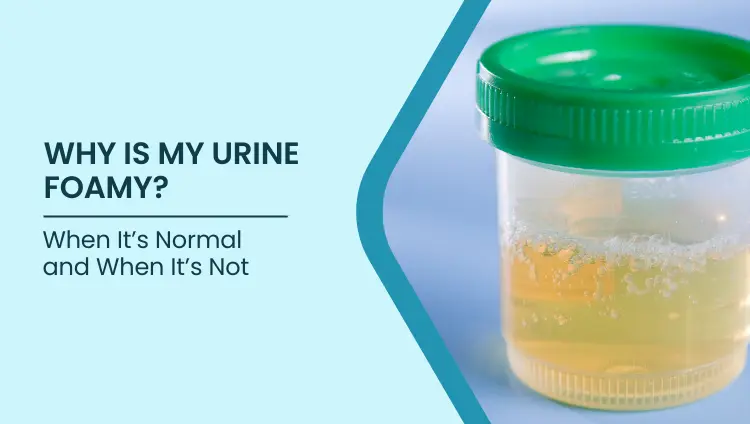
Foamy urine can sometimes be normal, but it may also indicate kidney issues such as protein leakage or infection. If you are experiencing persistent foamy urine in Bangalore, it is important to consult a specialist early for proper diagnosis. Conditions like kidney stones, infections, or kidney dysfunction can be identified through simple tests and treated effectively. This guide explains when foamy urine is normal, when to worry, and what treatment options are available.
Foamy urine can look like:
- Many bubbles covering the surface
- Thick white froth that does not clear quickly
- Foam that stays for several minutes after urinating
Key observation:
If bubbles disappear quickly, it is often harmless. If foam is frequent and stays, it may indicate protein in urine and needs evaluation.
If your bladder is full and you urinate with force, urine hits toilet water at high speed and forms bubbles, similar to water splashing into a sink.
- Usually happens after holding urine
- Foam clears quickly
- No other symptoms
When you drink less water:
- Urine becomes concentrated and darker
- It may look slightly foamy
Hydration typically improves this within 24 to 48 hours.
Sometimes foam is not from urine. Residual toilet cleaner can create froth when urine hits water.
If the foam happens occasionally and clears fast, this is a common reason.
Persistent foam that does not disappear easily can indicate proteinuria, meaning protein leaking into urine.
Healthy kidneys filter waste but retain protein in the bloodstream. When kidney filters are stressed or damaged, protein may leak into urine and create foam.
Protein in urine can occur due to:
Persistent foamy urine deserves evaluation because early kidney stress often has no pain.
Foamy urine can be an early clue of kidney problems. Watch for associated signs:
- Swelling in feet or ankles
- Puffiness around the eyes
- Unusual tiredness
- Change in urination pattern
- High blood pressure
Kidney disease can progress silently. That is why repeated foam should not be ignored.
UTI can sometimes change urine appearance and smell. You may notice:
A urine test confirms infection. Related information:
https://genesisshospital.com/treatments/urinary-tract-infections
Long-term uncontrolled blood sugar can damage kidney filters. Foamy urine may appear before other symptoms become obvious.
If you have diabetes, persistent foamy urine should be evaluated early, not later.
Any illness causing dehydration can concentrate urine temporarily, making it appear foamy. It often improves once hydration and fever settle.
In some men, semen flows backward into the bladder instead of out. This can cause foamy urine after ejaculation.
If it is frequent, or fertility is a concern, it needs urology evaluation.
No. Occasional bubbles are often harmless, especially after a fast stream or dehydration. Persistent thick foam that stays may suggest protein in urine and needs testing.
It is more concerning when:
- Foam is frequent and thick
- Foam stays for minutes
- There is swelling in legs or face
- Blood pressure is high
- You have diabetes
- Urine output is reduced
Yes. Concentrated urine can look slightly foamy. If hydration does not improve it, test for protein and infection.
- Urine routine examination (initial screen)
- Urine protein measurement (if needed)
- Kidney function blood tests (creatinine, eGFR) as advised by doctor
Consult a doctor if:
- Foam is persistent
- There is swelling in legs or face
- You have diabetes or high blood pressure
- You notice reduced urine output
- Foam is associated with fatigue or weight gain
If it is due to dehydration or a fast stream, it may resolve naturally. If it is due to protein leakage, it will usually persist unless the underlying cause is treated.
Doctors typically assess:
- Urine routine examination
- Urine protein test if required
- Kidney function blood tests
- Blood pressure measurement
- Ultrasound in select cases, especially if swelling, abnormal tests, or recurrent symptoms are present
Early evaluation helps detect kidney stress before complications develop.
Get evaluated if foamy urine occurs with:
- Swelling in feet, ankles, face, or around eyes
- Persistent fatigue
- Unexplained weight gain
- Reduced urine output
- Blood in urine
- High blood pressure
Prevention depends on the cause, but kidney-protective habits help:
- Drink adequate water daily
- Control blood sugar if diabetic
- Manage blood pressure consistently
- Avoid unnecessary painkillers
- Maintain healthy weight
- Get annual urine tests if you are high-risk
Kidney disease often develops silently. Foamy urine can be the only visible clue early on.
Testing early supports:
- Lifestyle correction
- Timely medication control
- Prevention of permanent damage
- Lower long-term risk of dialysis
Foamy urine is not always dangerous. A fast stream, dehydration, or toilet chemicals can cause temporary bubbles. However, persistent foam that does not disappear deserves attention because it may signal protein leakage or early kidney stress.
Do not panic. Do not ignore it either. A simple urine test usually provides clarity.
Is foamy urine always a sign of kidney disease?
No. Occasional bubbles can happen due to fast urination or dehydration. Persistent thick foam that does not disappear may indicate protein in urine and requires evaluation.
Can dehydration cause foamy urine?
Yes. When you drink less water, urine becomes concentrated and may appear slightly foamy. Increasing fluid intake often improves this.
What test is done for foamy urine?
Doctors usually recommend a urine routine test to check for protein and infection. Kidney function blood tests and blood pressure assessment may also be advised.
When should I worry about foamy urine?
Consult a doctor if foamy urine is persistent or associated with swelling, fatigue, high blood pressure, diabetes, or reduced urine output.
Can diabetes cause foamy urine?
Yes. Uncontrolled diabetes can damage kidney filters over time and lead to protein leakage and foamy urine.
Does foamy urine go away on its own?
If caused by dehydration or fast urine flow, it may resolve naturally. If due to kidney-related protein leakage, evaluation and treatment are needed.
Can stress cause foamy urine?
Stress alone does not directly cause foamy urine. However, dehydration and high blood pressure, which can worsen during stress, may contribute indirectly.
Book your consultation at Genesiss Multi-speciality Hospital