Quick Answer
Most gym supplements such as whey protein and creatine have not been proven to directly cause male infertility when used appropriately. However, anabolic steroids, testosterone-enhancing products, and unregulated supplements may affect sperm production, hormone balance, and fertility. If you are trying to conceive, understanding which products are generally safe and which may carry risks is important for protecting reproductive health.
Many men today are more health-conscious than ever before. Regular gym workouts, strength training, protein supplementation, and fitness-focused lifestyles have become common.
At the same time, fertility specialists are seeing a growing number of men ask an important question:
“Could my gym supplements be affecting my fertility?”
The concern is understandable. When a couple is trying to conceive, every lifestyle choice comes under scrutiny. The good news is that not every supplement is harmful. The challenge is separating scientific facts from myths.
At Genesiss Hospital, fertility evaluations often involve assessing both male and female factors through the hospital’s dedicated Male & Female Infertility and IVF Department. Understanding how supplements, hormones, exercise, and overall health interact can help couples make informed decisions while planning a pregnancy.
In most cases, exercise improves fertility rather than harms it.
Regular physical activity may help:
- Maintain a healthy body weight
- Improve hormone balance
- Support healthy testosterone production
- Improve blood circulation
- Reduce stress levels
- Improve overall reproductive health
Several studies have shown that men who maintain healthy fitness habits often have better fertility outcomes than men who are sedentary.
The issue is usually not exercise itself.
Problems are more commonly associated with:
- Overtraining
- Hormone misuse
- Anabolic steroid use
- Poor recovery
- Unregulated supplements
Fitness is generally beneficial. Unsafe shortcuts are what create fertility concerns.
Many gym-goers regularly use:
- Whey protein
- Casein protein
- Creatine
- Pre-workout supplements
- BCAA supplements
- Amino acid blends
- Mass gainers
- Fat burners
- Testosterone boosters
- Anabolic steroids
Not all of these products affect fertility in the same way.
Understanding the difference is important, especially for men actively planning fatherhood.
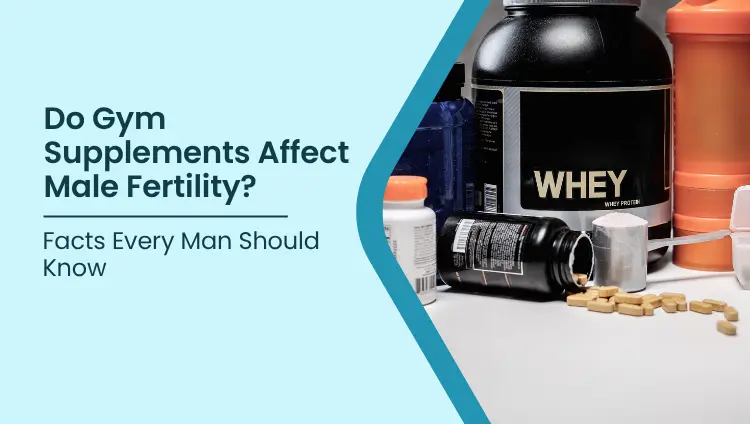
One of the biggest myths in men’s health is that whey protein causes infertility.
Current scientific evidence does not support this claim.
Whey protein is a protein source derived from milk. When consumed appropriately, it is generally considered safe for healthy individuals.
Current evidence does not show that pure whey protein:
- Reduces sperm count
- Causes infertility
- Significantly lowers fertility potential
- Directly damages sperm production
The greater concern is product quality.
Some low-quality supplements may contain undeclared ingredients, hormone-like compounds, contaminants, or substances that are not listed on the label.
For men concerned about fertility, choosing reputable products and maintaining overall health is often more important than avoiding whey protein itself.
Creatine is one of the most extensively researched sports supplements available today.
Current research has not shown a consistent link between creatine supplementation and male infertility.
Studies have not demonstrated that creatine significantly reduces:
- Sperm count
- Sperm motility
- Sperm morphology
- Fertility potential
For healthy men using recommended dosages, creatine is generally considered safe from a fertility perspective.
However, many commercial products combine creatine with multiple other ingredients. This makes it important to understand exactly what is being consumed.
While standard protein supplements are generally considered safe, certain products may pose risks.
Some testosterone-enhancing products may interfere with the body’s natural hormone production.
Potential effects may include:
- Reduced sperm production
- Hormonal imbalance
- Altered reproductive function
Men often assume higher testosterone automatically improves fertility. In reality, excessive external hormone stimulation may have the opposite effect.
Anabolic steroids remain one of the most significant preventable causes of male fertility problems.
These substances may:
- Suppress natural testosterone production
- Reduce sperm count significantly
- Affect sperm quality
- Cause testicular shrinkage
- Delay conception
Many men are surprised to learn that muscle-building drugs can severely impact reproductive health.
The supplement industry is large, and not all products undergo the same level of quality control.
Certain products sold online may contain:
- Hidden hormones
- Steroid derivatives
- Contaminants
- Unlisted ingredients
This is why fertility specialists often recommend purchasing supplements only from trusted manufacturers.
Many men assume supplements are the primary cause of infertility.
In reality, fertility specialists frequently identify other underlying causes.
Male fertility assessment may involve evaluation by specialists experienced in both reproductive medicine and urology. At Genesiss Hospital, fertility care is supported through collaboration between the Male & Female Infertility and IVF Department and the Urology & Kidney Care Department.
Common causes include:
Varicocele is one of the most common correctable causes of male infertility.
This condition involves enlarged veins around the testicle and may affect:
- Sperm production
- Sperm quality
- Testicular function
Men with fertility concerns may require evaluation from specialists such as Dr Raju R, who manages male reproductive and andrological conditions.
Hormonal imbalances affecting testosterone, pituitary hormones, or thyroid function may impact fertility.
Lifestyle-related causes include:
- Smoking
- Excess alcohol consumption
- Obesity
- Poor sleep
- Chronic stress
- Recreational drug use
These factors often have a greater impact on fertility than standard gym supplements.
Certain medical conditions may also affect fertility, including:
- Diabetes
- Previous infections
- Genetic conditions
- Testicular disorders
- Previous surgeries
Many of these causes are treatable when identified early.
Male infertility often develops silently.
Many men experience no obvious symptoms until pregnancy does not occur despite regular unprotected intercourse.
Possible warning signs include:
- Difficulty conceiving
- Reduced sexual desire
- Hormonal symptoms
- Erectile difficulties
- Testicular discomfort
- Previous abnormal semen analysis
Couples who have been trying for more than a year may benefit from reading our guide on When to Consider Fertility Support.
In general, yes.
Men who maintain:
- Healthy body weight
- Good nutrition
- Consistent exercise
- Adequate sleep
- Low stress levels
often demonstrate better reproductive health than men with poor lifestyle habits.
Fitness itself is rarely the problem.
The concern is usually excessive hormone use, unsafe supplementation practices, or underlying medical conditions.
If you are planning to have children, consider the following:
Use supplements from trusted manufacturers with transparent ingredient lists.
Steroid use remains one of the most significant preventable causes of male fertility problems.
Fertility is influenced by:
- Nutrition
- Sleep quality
- Weight management
- Exercise habits
- Hormonal balance
- Stress management
Early evaluation often identifies treatable causes before they become long-term concerns.
You should consider medical evaluation if:
- Pregnancy has not occurred after 12 months of trying
- You have a history of steroid use
- You have hormonal symptoms
- Previous semen analysis was abnormal
- You have undergone testicular surgery
- You have known reproductive concerns
Couples often focus entirely on supplements while overlooking other fertility-related conditions.
Female reproductive health also plays a major role in conception. Conditions such as ovulation disorders and PCOS can affect pregnancy outcomes even when symptoms appear mild. Learn more in our article on PCOS but No Symptoms: Can It Still Affect Pregnancy?.
Couples exploring fertility treatment pathways may also benefit from understanding IVF vs Natural Pregnancy – When Should You Choose What?.
At Genesiss Hospital, fertility care is led by specialists including Dr Divya J G, who works extensively in fertility medicine, IVF, reproductive health, and conception planning.
Comprehensive care is available through the hospital’s Obstetrics & Gynaecology Department and fertility services team.
Fertility challenges are rarely caused by a single factor.
Successful conception depends on:
- Male reproductive health
- Female reproductive health
- Hormonal balance
- Lifestyle factors
- Timing
- Underlying medical conditions
Genesiss Hospital provides integrated fertility care through fertility specialists, reproductive experts, and andrology-focused evaluation pathways.
To learn more about the hospital’s patient-centred approach, visit About Genesiss Hospital or explore all available Medical Specialities.
Early evaluation can often identify treatable causes and improve the chances of successful conception.
Consult a fertility specialist or andrologist if:
- You have been trying to conceive for more than 12 months
- You have concerns about sperm quality
- You have previously used anabolic steroids
- You have hormonal symptoms
- You have known fertility concerns
Timely evaluation often helps identify the real cause rather than focusing solely on supplements.
Dr Raju R
Consultant Urologist, Andrologist & Male Fertility Specialist
Dr Raju R specialises in male infertility, andrology, reproductive health, urinary disorders, and advanced fertility evaluation.
Can gym supplements affect male fertility?
Some supplements, particularly anabolic steroids and certain testosterone-enhancing products, may affect fertility. Standard whey protein and creatine have not been proven to directly cause infertility when used appropriately.
Does protein powder affect fertility?
Current evidence does not show that pure whey protein directly affects male fertility. Product quality and ingredient transparency remain important considerations.
Can creatine affect fertility?
Current research has not demonstrated a direct relationship between creatine supplementation and male infertility.
What can damage male fertility?
Smoking, excessive alcohol use, anabolic steroids, obesity, hormonal disorders, poor sleep, chronic stress, and certain medical conditions are more strongly associated with fertility problems.
Is exercise good for male fertility?
Moderate regular exercise generally supports hormone balance, healthy weight management, and reproductive health.
What are the first signs of male infertility?
Many men have no symptoms. Possible signs include difficulty conceiving, hormonal changes, sexual dysfunction, testicular discomfort, or abnormal semen analysis results.
Most common gym supplements such as whey protein and creatine are not currently supported by strong evidence as causes of male infertility. However, anabolic steroids, testosterone-enhancing products, and unregulated supplements can negatively affect reproductive health and fertility potential.
For men planning fatherhood, the focus should be on overall health, evidence-based supplementation, healthy lifestyle habits, and timely fertility evaluation when needed. Understanding the difference between safe fitness practices and potentially harmful products can help protect both long-term health and future fertility.