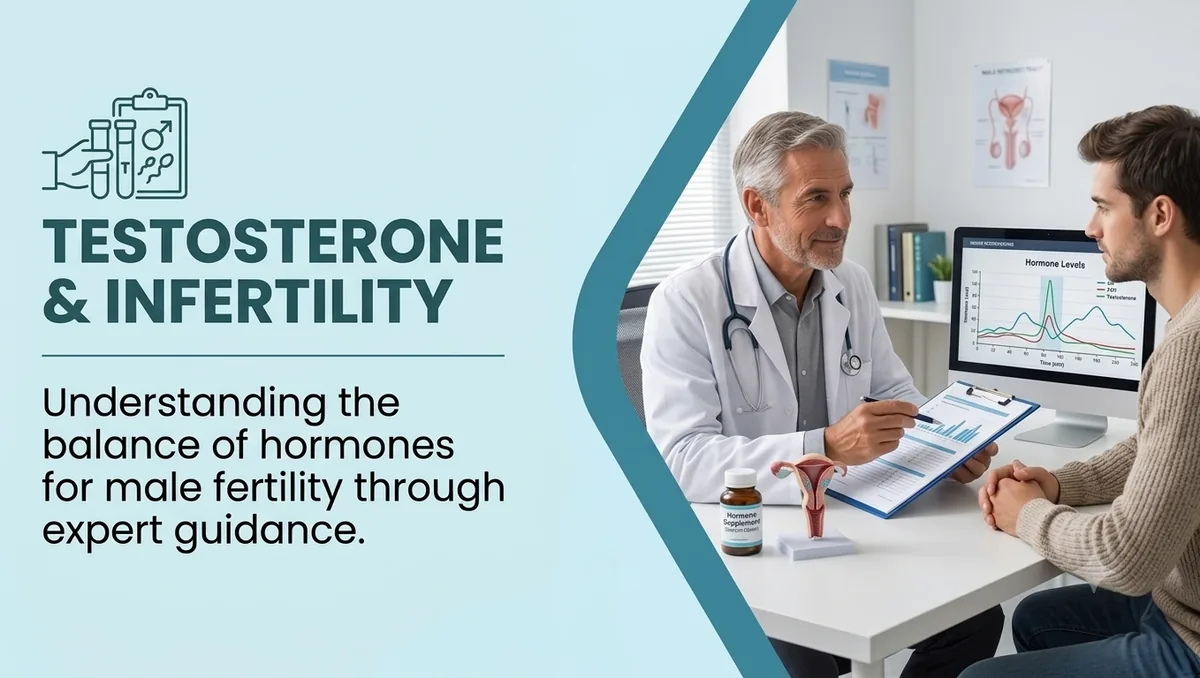
Low testosterone is often treated with testosterone replacement therapy (TRT) to relieve symptoms like fatigue, low libido, and mood changes. What surprises many men is that this very treatment — meant to boost a “male” hormone — can significantly reduce or even eliminate sperm production. Here’s why, and what fertility-conscious alternatives exist.
Sperm production depends on a signalling chain between the brain and the testicles:
- The brain releases hormones (GnRH, then FSH and LH) that signal the testicles to produce both testosterone and sperm
- When testosterone is supplied externally (through injections, gels, or patches), the brain senses “enough testosterone is already present”
- It responds by shutting down its own signals (FSH and LH)
- Without FSH and LH, the testicles stop producing both natural testosterone and sperm
This is why external testosterone — even though it’s the same hormone the testicles naturally produce — actually suppresses natural sperm production rather than supporting it. In many men, TRT can reduce sperm count dramatically within a few months, and it can even cause azoospermia (zero sperm count) in some cases.
- Men taking TRT for symptomatic low testosterone
- Men using testosterone or anabolic steroids for bodybuilding or performance purposes, often without medical supervision
- The effect can occur regardless of the form of testosterone used — injections, gels, patches, or pellets
For most men, sperm production recovers after stopping testosterone therapy, but this can take anywhere from several months to over a year, and in a small proportion of men, particularly after long-term use, recovery may be incomplete. Recovery time tends to be longer with:
- Longer duration of testosterone use
- Higher doses
- Older age at the time of stopping
If you’re planning to father a child in the near future, this is a conversation to have with your doctor before starting testosterone therapy — not after.
For men with low testosterone who still want to conceive, several alternatives can raise testosterone-related symptoms without shutting down sperm production:
- hCG (human chorionic gonadotropin) therapy: Mimics LH, stimulating the testicles to produce testosterone naturally while maintaining sperm production
- Clomiphene citrate or similar medications: Stimulate the body’s own FSH and LH production, raising natural testosterone while preserving fertility
- Combining hCG with TRT, in select cases, to offset the suppressive effect
- Sperm banking (cryopreservation) before starting TRT, as a safeguard for men who need testosterone therapy but want to preserve the option of biological children later
- Whether you are currently trying to conceive, or plan to within the next few years
- Whether a fertility-preserving alternative (like hCG or clomiphene) is appropriate for your situation
- Whether sperm banking makes sense as a precaution before starting treatment
- A clear plan for monitoring and, if needed, transitioning off TRT if fertility becomes a priority
Does testosterone therapy always cause infertility?
Not always, but it commonly reduces sperm count significantly, and can cause complete absence of sperm in many men. The effect and its severity vary between individuals.
How long after stopping testosterone therapy does fertility return?
It varies — often several months to over a year — and depends on the duration and dose of prior treatment. In some men, especially after prolonged use, recovery can be incomplete.
Can I take testosterone and still stay fertile?
Direct testosterone replacement typically isn’t compatible with maintaining fertility. Alternatives like hCG or clomiphene can raise testosterone-related benefits while preserving sperm production in many cases.
Should I bank sperm before starting testosterone therapy?
If future fertility matters to you, this is worth discussing with your doctor, especially if you expect to be on therapy long-term.
Does testosterone gel have the same effect as injections?
Yes — the suppressive effect on sperm production applies to all forms of external testosterone, not just injections.
Testosterone replacement therapy can meaningfully relieve symptoms of low testosterone, but it comes with an under-discussed trade-off: suppressed sperm production, sometimes to the point of complete infertility. If fertility is a priority now or in the future, fertility-preserving alternatives exist — the key is raising this with your doctor before starting treatment, not after.