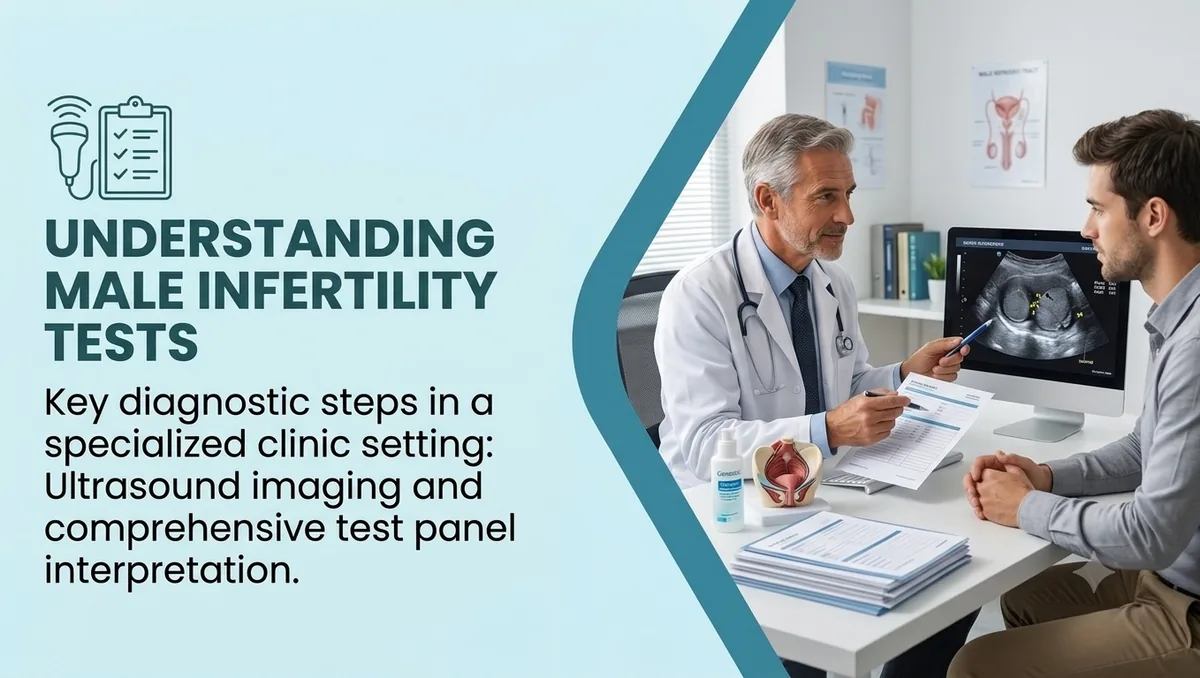
When a couple is evaluated for infertility, the male partner’s work-up usually follows a structured sequence — starting with simple, non-invasive tests and moving to more specialised ones only if needed. Knowing what each test checks can make the process feel far less overwhelming.
Before any test, your doctor will typically ask about:
- Duration of trying to conceive, and any previous pregnancies
- Past surgeries, infections, or injuries involving the reproductive organs
- Lifestyle factors — smoking, alcohol, heat exposure, medications
- Sexual health and ejaculatory function
A physical exam checks testicular size and consistency, looks for varicocele, and screens for any structural abnormality.
This is the cornerstone test for male infertility, evaluating:
- Sperm count (concentration)
- Motility (movement)
- Morphology (shape)
- Volume, pH, and liquefaction
Because results can vary between samples, an abnormal result is usually confirmed with a repeat test 2–3 weeks later before further tests are ordered.
If semen parameters are abnormal, especially with a very low or zero sperm count, hormone testing helps identify whether the problem originates in the testicles or in the hormonal signals that control them.
- FSH (Follicle-Stimulating Hormone): High levels often suggest a testicular production problem; low levels suggest a signalling problem from the brain
- LH (Luteinizing Hormone): Works alongside FSH to regulate testosterone and sperm production
- Testosterone: Assesses overall reproductive hormone status
- Prolactin and thyroid hormones: Checked when hormonal imbalance is suspected, as both can affect fertility when abnormal
A scrotal ultrasound with Doppler is a painless, non-invasive imaging test used to:
- Confirm or rule out varicocele and grade its severity
- Check testicular size, structure, and blood flow
- Identify blockages, cysts, or other structural abnormalities
- Rule out testicular masses, which is also an important general health screening step
Genetic testing is not needed for every man, but is recommended in specific situations:
- Very low or zero sperm count (severe oligospermia or azoospermia)
- Small testicular size with high FSH levels
- Family history of genetic fertility conditions
Common tests include karyotyping (checking chromosome structure) and Y-chromosome microdeletion testing, which can identify genetic causes that also carry implications for any children conceived using the man’s sperm — which is why genetic counselling is offered alongside this testing.
Depending on findings so far, your doctor may recommend:
- Sperm DNA fragmentation testing — for unexplained infertility or recurrent IVF failure
- Anti-sperm antibody testing — when sperm clumping or a history of trauma/surgery raises suspicion
- Testicular biopsy — to directly assess sperm production, sometimes combined with sperm retrieval
Not every man needs every test. Your doctor tailors the work-up based on your history, exam, and semen analysis results — moving to more advanced testing only when it will actually change the treatment plan.
A basic work-up (history, exam, and semen analysis) can often be completed within a single visit and one lab report. Hormone tests, ultrasound, and any specialised testing generally add one to a few additional visits, depending on what’s needed and how quickly results are required.
What is the very first test for male infertility?
A semen analysis, usually combined with a detailed history and physical examination.
Do I need a genetic test for infertility?
Only in specific situations — typically very low or zero sperm count, small testicles with high FSH, or a family history of genetic fertility conditions. Your doctor will advise if it’s relevant to you.
Is scrotal ultrasound painful?
No, it’s a painless, non-invasive imaging test similar to any other ultrasound.
Why are hormone tests needed if semen analysis is already abnormal?
Hormone levels help identify whether the cause lies in the testicles themselves or in the hormonal signals controlling sperm production — which changes the treatment approach.
How much does a full male infertility work-up cost?
Costs vary depending on which tests are needed. Your doctor can outline exactly which tests apply to your case and the associated costs during consultation.
Diagnosing male infertility follows a logical, step-by-step process — starting simple and only escalating to specialised testing when it’s genuinely needed. Understanding what each test checks can make the evaluation feel far less confusing, and helps you and your doctor build a clear, targeted treatment plan.