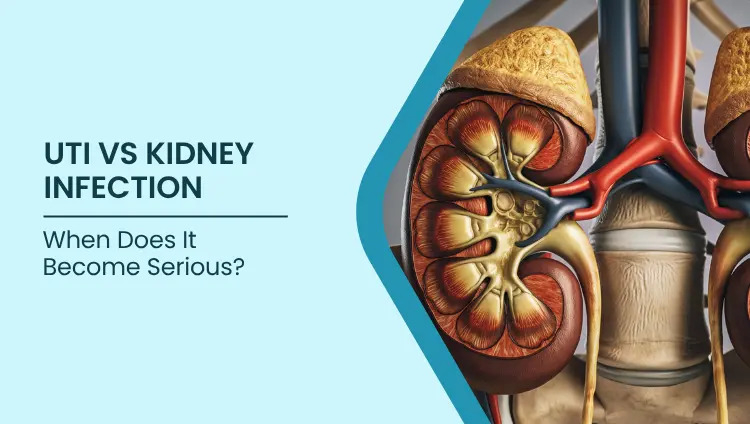
Urinary tract infections (UTIs) and kidney infections are related, but they are not the same. A UTI usually starts in the bladder and is often mild if treated early. A kidney infection is more serious and affects the upper urinary tract. If untreated, it can lead to complications.
Many people confuse the two because early symptoms overlap. Burning while urinating, frequent urination, and lower abdominal discomfort are common in simple UTIs. However, when fever, back pain, nausea, or chills develop, the infection may have spread to the kidneys. Understanding the difference helps you decide when urgent medical care is necessary.
A urinary tract infection occurs when bacteria enter the urinary system and multiply. Most UTIs affect the bladder and urethra.
Common cause:
- Bacteria such as E. coli entering through the urethra
Most affected:
- Women
- Elderly individuals
- People with diabetes
Severity:
- Usually mild if treated early
Treatment:
- Oral antibiotics
- Hydration
- Symptom relief medication
Typical symptoms include:
- Burning sensation while urinating
- Frequent urge to urinate
- Cloudy or strong-smelling urine
- Mild lower abdominal discomfort
A simple UTI rarely causes high fever or severe body symptoms.
A kidney infection, also called pyelonephritis, occurs when bacteria travel upward from the bladder to one or both kidneys. This is a more serious condition and can spread to the bloodstream if ignored.
Origin:
- Usually an untreated or poorly treated UTI
Location:
Risk level:
Treatment:
- Stronger antibiotics
- Sometimes IV therapy
- Possible hospital monitoring
Common symptoms include:
- High fever (often above 101°F)
- Chills and shaking
- Pain in the upper back or side (flank pain)
- Nausea or vomiting
- Fatigue or weakness
Unlike a simple bladder infection, kidney infections affect the entire body.
| Feature |
UTI (Bladder Infection) |
Kidney Infection |
| Fever |
Rare or mild |
High fever common |
| Back Pain |
Usually absent |
Present (upper back/flank) |
| Nausea/Vomiting |
Uncommon |
Common |
| Severity |
Mild to moderate |
Serious |
| Treatment |
Oral antibiotics |
May require IV antibiotics |
| Risk of Complications |
Low if treated early |
Higher if delayed |
Recognizing these differences helps identify when symptoms are no longer just a simple UTI.
Not every UTI is an emergency. However, certain symptoms require immediate medical attention.
Seek urgent care if you experience:
- Persistent high fever
- Severe back or side pain
- Vomiting that prevents oral medication
- Confusion, especially in elderly patients
- Reduced urine output
- Blood in urine with severe pain
- Symptoms worsening despite antibiotics
Kidney infections can lead to sepsis, particularly in diabetics, elderly individuals, or those with weakened immunity.
Certain groups are more vulnerable:
- Pregnant women
- People with diabetes
- Individuals with kidney stones
- Patients with urinary obstruction
- Those with recurrent UTIs
- Elderly patients
In these individuals, infections may progress more quickly and require closer monitoring.
Doctors evaluate symptoms along with laboratory tests.
- Urine routine and culture to detect bacteria
- Blood tests to assess systemic infection
- Ultrasound to evaluate kidney involvement
- CT scan in complicated cases
Early testing determines whether the infection is limited to the bladder or has spread upward.
For UTIs:
- Short course of oral antibiotics
- Increased fluid intake
- Symptom relief medication
For kidney infections:
- Longer antibiotic course
- Possible hospital admission
- IV antibiotics in moderate or severe cases
- Monitoring for complications
Delaying treatment increases the risk of kidney damage.
Yes. If a bladder infection is ignored or inadequately treated, bacteria can ascend to the kidneys.
Warning signs of progression include:
- New onset fever
- Increasing back pain
- Systemic weakness
- Persistent symptoms after 48 hours of antibiotics
Prompt medical evaluation prevents complications.
Consult a doctor if:
- Urinary symptoms last more than 48 hours
- Fever develops
- Back or flank pain appears
- You are pregnant and develop urinary symptoms
- You have recurrent infections
- There is underlying kidney stone disease
If you are in Bangalore, especially around BTM Layout or South Bangalore, early evaluation helps prevent infection spread and long-term kidney damage.
- Stay well hydrated
- Do not delay urination
- Maintain proper hygiene
- Manage diabetes effectively
- Complete the full course of antibiotics
- Evaluate for underlying conditions such as kidney stones
Timely care reduces repeat infections.
A UTI and a kidney infection may begin similarly, but they differ in severity and urgency. While a bladder infection is usually manageable with early treatment, a kidney infection can become serious if ignored.
Recognizing warning signs such as high fever, back pain, and vomiting helps you seek care at the right time. Early diagnosis and appropriate treatment protect kidney health and prevent complications.
What is the main difference between UTI and kidney infection?
A UTI usually affects the bladder and causes burning urination and frequency. A kidney infection involves the kidneys and causes fever, back pain, and systemic symptoms.
Can a kidney infection go away on its own?
No. Kidney infections require antibiotics and medical supervision. Delaying treatment increases the risk of complications.
How quickly can a UTI become a kidney infection?
It can progress within a few days if untreated, especially in high-risk individuals.
Is fever common in a simple UTI?
High fever is uncommon in bladder infections. Fever usually suggests kidney involvement.
Are kidney infections life-threatening?
They can become serious if untreated and may lead to sepsis. Early treatment significantly reduces risk.
When should I go to the emergency room for a UTI?
If you have high fever, severe back pain, vomiting, confusion, or worsening symptoms despite medication, urgent care is necessary.