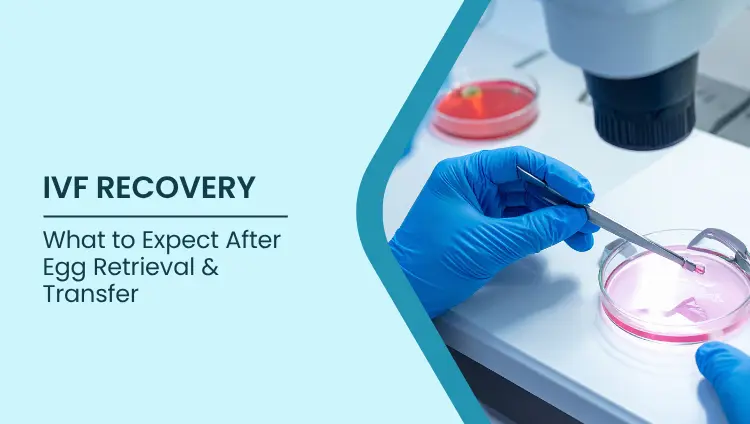
IVF recovery is usually manageable, but the experience differs after egg retrieval and embryo transfer. After egg retrieval, mild cramping, bloating, spotting, and tiredness are common for a few days. After embryo transfer, many women experience mild cramps, breast tenderness, bloating, or no symptoms at all. These symptoms do not confirm success or failure. Severe pain, heavy bleeding, fever, breathing difficulty, or worsening abdominal swelling should be reported to your fertility specialist immediately.
IVF can feel emotionally and physically intense because every step carries hope, waiting, and uncertainty.
Many women worry about what is normal after egg retrieval, what to avoid after embryo transfer, and whether every cramp or symptom means something. The truth is that recovery signs vary from person to person.
Understanding what to expect can help you stay calm, follow medical instructions properly, and know when to ask for help.
Egg retrieval is the step where mature eggs are collected from the ovaries after ovarian stimulation.
The procedure is usually done under sedation or anaesthesia, so most women do not feel pain during the process. A fertility specialist uses ultrasound guidance to collect eggs from the ovaries through a fine needle.
After the procedure, you will rest under observation for some time before going home.
Common feelings after egg retrieval include:
- Sleepiness due to sedation
- Mild lower abdominal cramps
- Bloating
- Pelvic heaviness
- Light spotting
- Fatigue
Most women feel better within 1–2 days, though bloating may take a little longer to settle.
Mild discomfort after egg retrieval is expected because the ovaries have been stimulated and handled during the procedure.
Normal symptoms may include:
- Mild cramping similar to period pain
- Light vaginal spotting
- Bloating or abdominal fullness
- Tiredness
- Mild nausea
- Constipation
- Breast tenderness due to hormonal medicines
These symptoms usually improve gradually.
You should rest, stay hydrated, eat light nutritious food, and take medicines exactly as advised by your doctor.
After egg retrieval, your ovaries may remain enlarged for a short time. Because of this, your doctor may advise you to avoid activities that put pressure on the abdomen.
You may be asked to avoid:
- Heavy exercise
- Lifting heavy objects
- High-impact workouts
- Swimming until advised
- Intercourse for a few days
- Alcohol
- Self-medication
- Skipping prescribed medicines
Light walking is usually acceptable unless your doctor advises otherwise.
The goal is not complete bed rest. The goal is safe recovery.
Most symptoms after egg retrieval are mild. However, some signs need urgent medical attention.
Call your doctor if you experience:
- Severe abdominal pain
- Heavy vaginal bleeding
- Fever
- Dizziness or fainting
- Difficulty breathing
- Severe bloating
- Reduced urination
- Persistent vomiting
- Rapid weight gain
- Pain that worsens instead of improving
These symptoms may suggest infection, bleeding, ovarian hyperstimulation syndrome, or another complication that needs evaluation.
OHSS stands for Ovarian Hyperstimulation Syndrome.
It can happen when the ovaries respond strongly to fertility medicines. Mild bloating and discomfort are common after stimulation, but OHSS is more concerning when symptoms become severe.
Possible symptoms include:
- Significant abdominal swelling
- Severe pelvic pain
- Nausea or vomiting
- Breathlessness
- Reduced urination
- Sudden weight gain
Women with PMOS, high ovarian reserve, or strong response to stimulation may have a higher risk.
If symptoms feel unusual or intense, do not wait at home. Contact your fertility team.
Embryo transfer is usually a simpler and less uncomfortable step compared to egg retrieval.
During embryo transfer, the embryo is placed inside the uterus using a thin catheter. It usually does not require anaesthesia.
Some women may feel mild pressure, similar to a pelvic examination.
After the transfer, you may rest briefly and then return home with instructions from your fertility specialist.
After embryo transfer, many women start noticing every small body change. This is understandable.
Normal symptoms may include:
- Mild cramps
- Light spotting
- Breast tenderness
- Bloating
- Tiredness
- Mood changes
- Mild backache
- No symptoms at all
Having symptoms does not confirm pregnancy.
Having no symptoms does not mean IVF has failed.
Many symptoms after embryo transfer are caused by hormonal medicines, progesterone support, ovarian stimulation, or normal body response.
After embryo transfer, you do not usually need strict bed rest unless your doctor advises it.
However, you should avoid unnecessary physical and emotional strain.
Your doctor may advise you to avoid:
- Heavy lifting
- High-intensity exercise
- Smoking
- Alcohol
- Skipping progesterone medicines
- Taking medicines without approval
- Excessive heat exposure
- Repeated home pregnancy testing too early
Gentle daily activity is usually fine.
The most important thing is to follow your fertility specialist’s specific instructions because every IVF cycle is different.
Strict bed rest is not usually required after embryo transfer.
Many women are advised to continue normal light activities. Lying down all day does not guarantee implantation and may increase anxiety.
A balanced approach is better:
- Rest on the day of transfer
- Walk gently if comfortable
- Eat well
- Stay hydrated
- Sleep adequately
- Avoid unnecessary stressors where possible
The embryo does not “fall out” when you walk, sit, or use the bathroom.
The two-week wait is the period between embryo transfer and the pregnancy test.
This can be emotionally difficult because symptoms are not reliable during this time.
Some women feel cramps and later test positive.
Some women feel nothing and still test positive.
Some women experience pregnancy-like symptoms because of progesterone medicines.
During this time:
- Take medicines on time
- Avoid testing too early
- Follow diet and activity instructions
- Report severe symptoms
- Keep follow-up appointments
- Avoid comparing your symptoms with others
The blood test advised by your doctor is the most reliable way to confirm pregnancy.
There is no magic IVF food that guarantees success.
However, a balanced diet can support recovery and overall health.
Helpful options include:
- Protein-rich foods such as eggs, dal, paneer, curd, fish, or lean meat
- Fruits and vegetables
- Whole grains
- Nuts and seeds if tolerated
- Adequate fluids
- Fibre-rich foods to reduce constipation
Avoid extreme diets, fasting, or unverified fertility supplements unless prescribed.
If pregnancy is confirmed later, you can follow structured guidance from your obstetrician for early pregnancy nutrition.
Short local travel may be allowed depending on your condition and doctor’s advice.
However, avoid unnecessary long travel immediately after egg retrieval or embryo transfer if you are uncomfortable, bloated, or advised to rest.
If travel is unavoidable, discuss it with your fertility specialist first.
Your doctor may guide you based on:
- Number of eggs retrieved
- Risk of OHSS
- Embryo transfer timing
- Medicines required
- Pregnancy test schedule
- Overall health
IVF recovery is not only physical.
The waiting, uncertainty, injections, scans, and expectations can affect emotional wellbeing.
It is normal to feel:
- Hopeful
- Nervous
- Sensitive
- Restless
- Afraid to overthink symptoms
- Worried about the result
Try to avoid blaming yourself for the outcome. IVF success depends on several factors, including age, egg quality, sperm quality, embryo health, uterine lining, and implantation.
If a cycle does not work, it does not mean pregnancy is impossible. A careful review can help plan the next step.
Follow-up after IVF helps your doctor monitor recovery, medicine response, and pregnancy outcomes.
You should attend follow-up visits as advised, especially if you have:
- Severe bloating
- Pain after retrieval
- Previous failed IVF
- PMOS
- Endometriosis
- Recurrent pregnancy loss
- High-risk medical conditions
If you are unsure why IVF may not work in some cycles, you can read our guide on Why Does IVF Fail? Common Reasons and What to Do Next.
At Genesiss Multispeciality Hospital, fertility care is led by Dr Divya J G, Obstetrician, Gynaecologist, IVF Specialist, and Laparoscopic Surgeon.
The IVF care process includes:
- Fertility evaluation
- Ovarian stimulation monitoring
- Egg retrieval guidance
- Embryo transfer planning
- Post-transfer support
- Pregnancy test follow-up
- Early pregnancy care when conception occurs
Patients can also explore the Male & Female Infertility & IVF Department for fertility treatment options and the Obstetrics & Gynaecology Department for pregnancy care after a positive result.
Contact your fertility specialist immediately if you notice:
- Heavy bleeding
- Severe abdominal pain
- Fever
- Breathlessness
- Severe vomiting
- Reduced urination
- Worsening abdominal swelling
- Fainting or dizziness
- Pain after embryo transfer that feels severe
You should also consult your doctor if you are confused about medicines, activity restrictions, food, travel, or when to take the pregnancy test.
Many women feel better within 1–2 days after egg retrieval. However, recovery may take longer if bloating, discomfort, or risk of OHSS is present.
Embryo transfer is usually not painful. Some women may feel mild pressure or discomfort similar to a pelvic examination.
Yes, gentle walking is usually allowed unless your doctor advises otherwise. Strict bed rest is not usually required.
Mild cramping can happen after embryo transfer and may be due to the procedure, medicines, or hormonal changes. Severe pain should be reported.
No. Light spotting does not confirm success or failure. It may occur due to cervical irritation, medicines, or other causes.
You should take the pregnancy test on the date recommended by your fertility specialist. Testing too early can give misleading results.
Dr Divya J G
Obstetrician, Gynaecologist, IVF Specialist & Laparoscopic Surgeon
Genesiss Multispeciality Hospital, BTM Layout
Recovery after IVF is different for every woman. Mild cramping, bloating, spotting, tiredness, or even no symptoms can all occur after egg retrieval or embryo transfer.
The safest approach is to follow your fertility specialist’s instructions, avoid comparing symptoms, take medicines on time, and report warning signs early. With proper support and follow-up, the IVF recovery period becomes easier to manage physically and emotionally.