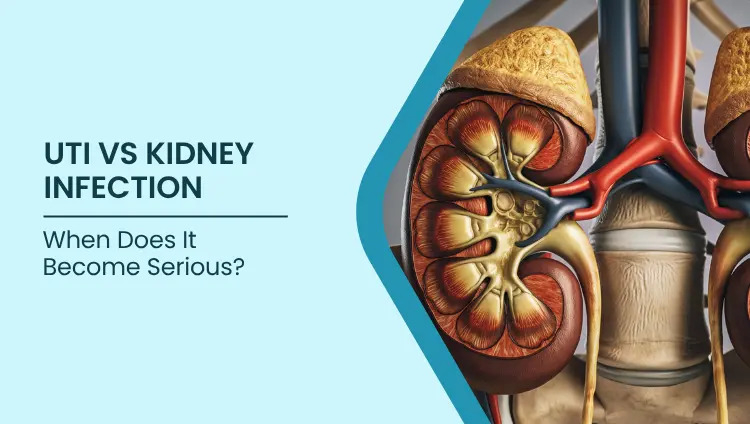
A urinary tract infection (UTI) and a kidney infection are related but not the same. A UTI usually starts in the lower urinary tract, such as the bladder, while a kidney infection is a more serious condition that occurs when the infection spreads to the kidneys. Understanding the difference is important because early treatment of a UTI can prevent it from becoming severe.
Many people experience burning during urination or frequent urges and assume it is a minor issue. However, ignoring early symptoms can sometimes allow the infection to travel upward, leading to more serious complications. This guide explains how to differentiate between a UTI and a kidney infection, warning signs, and when immediate medical care is needed.
A UTI and a kidney infection differ mainly in location and severity.
- UTI (Lower urinary tract infection): Affects the bladder or urethra
- Kidney infection (Pyelonephritis): Affects one or both kidneys
- Severity: UTIs are usually mild; kidney infections are more serious
- Treatment urgency: Kidney infections require immediate medical attention
A kidney infection often develops when a UTI is left untreated or does not respond to treatment.
UTI symptoms are usually localized to the lower urinary tract.
- Burning sensation during urination
- Frequent urge to urinate
- Passing small amounts of urine
- Cloudy or strong-smelling urine
- Mild lower abdominal discomfort
These symptoms may feel uncomfortable but are generally manageable if treated early.
Kidney infections involve more severe and systemic symptoms.
- High fever and chills
- Pain in the back or side (flank pain)
- Nausea and vomiting
- Fatigue and weakness
- Symptoms of UTI along with worsening condition
The presence of fever and back pain is a key indicator that the infection may have reached the kidneys.
A kidney infection usually occurs when bacteria travel upward from the bladder.
- Untreated UTI: Infection spreads over time
- Incomplete treatment: Stopping antibiotics early
- Weak immune response: Body unable to control infection
- Structural issues: Blockages or urinary reflux
Early diagnosis and proper treatment of UTIs significantly reduce this risk.
Yes. A kidney infection can become serious if not treated promptly.
- Spread of infection to bloodstream (sepsis)
- Permanent kidney damage
- Recurrent infections
- Hospitalization in severe cases
The severity of infection can vary, and early medical care plays a critical role in preventing complications.
Kidney infections require urgent medical evaluation and should never be ignored.
Certain symptoms indicate progression toward a more serious infection.
- Fever above 38°C
- Persistent or worsening pain
- Pain in the back or sides
- Nausea or vomiting
- Blood in urine
These signs suggest that the infection may no longer be limited to the bladder.
Some individuals are more vulnerable to complications.
- Women (due to shorter urethra)
- Pregnant women
- People with diabetes
- Individuals with kidney stones
- Those with weakened immunity
Understanding risk factors helps in early monitoring and prevention.
Diagnosis involves clinical evaluation and tests.
- Urine test: Detects bacteria and infection
- Blood tests: Assess severity and systemic infection
- Ultrasound or imaging: Identify structural issues
- Culture tests: Determine specific bacteria
Accurate diagnosis ensures appropriate treatment.
Treatment differs based on severity.
For UTI:
- Oral antibiotics
- Increased fluid intake
- Symptom management
For Kidney Infection:
- Stronger or intravenous antibiotics
- Hospital care in severe cases
- Monitoring kidney function
Early treatment of UTIs is simpler and prevents complications.
Yes. Preventive steps can reduce risk significantly.
- Do not ignore early symptoms
- Complete prescribed antibiotic course
- Stay hydrated
- Maintain proper hygiene
- Seek medical advice early
Timely care is the most effective way to prevent complications.
Recognizing urgency is critical.
You should seek medical attention immediately if you experience:
- High fever with urinary symptoms
- Severe back or flank pain
- Persistent vomiting
- Blood in urine
- Symptoms not improving after initial treatment
If you are consulting a hospital in Bangalore, especially around BTM Layout or South Bangalore, early evaluation helps prevent kidney involvement and serious complications.
Yes, with proper treatment.
- Most infections respond well to antibiotics
- Early diagnosis prevents long-term damage
- Follow-up care ensures complete recovery
Delayed treatment increases the risk of complications, making timely care essential.
Simple habits can reduce infection risk.
- Drink adequate water daily
- Maintain personal hygiene
- Avoid delaying urination
- Follow medical advice for recurrent infections
- Manage underlying conditions like diabetes
These steps help maintain urinary tract health and reduce infection risk.
Can a UTI go away without treatment?
Mild UTIs may sometimes improve, but medical treatment is recommended to prevent complications like kidney infection.
How quickly can a UTI turn into a kidney infection?
It can happen within days if the infection is untreated or severe. Early treatment reduces this risk significantly.
Is a kidney infection life-threatening?
In severe cases, especially if untreated, it can lead to serious complications like sepsis.
Can drinking water cure a UTI?
Drinking water helps flush bacteria but does not replace medical treatment when needed.
Is back pain always a sign of kidney infection?
Not always, but when combined with fever and urinary symptoms, it should be evaluated.
Who should be more cautious about UTIs?
Pregnant women, diabetics, and individuals with weakened immunity should be more cautious.
Understanding the difference between a UTI and a kidney infection is important for early action. While UTIs are common and often manageable, ignoring them can lead to serious complications.
Paying attention to symptoms, seeking timely care, and following treatment properly can help prevent progression and protect your overall health.