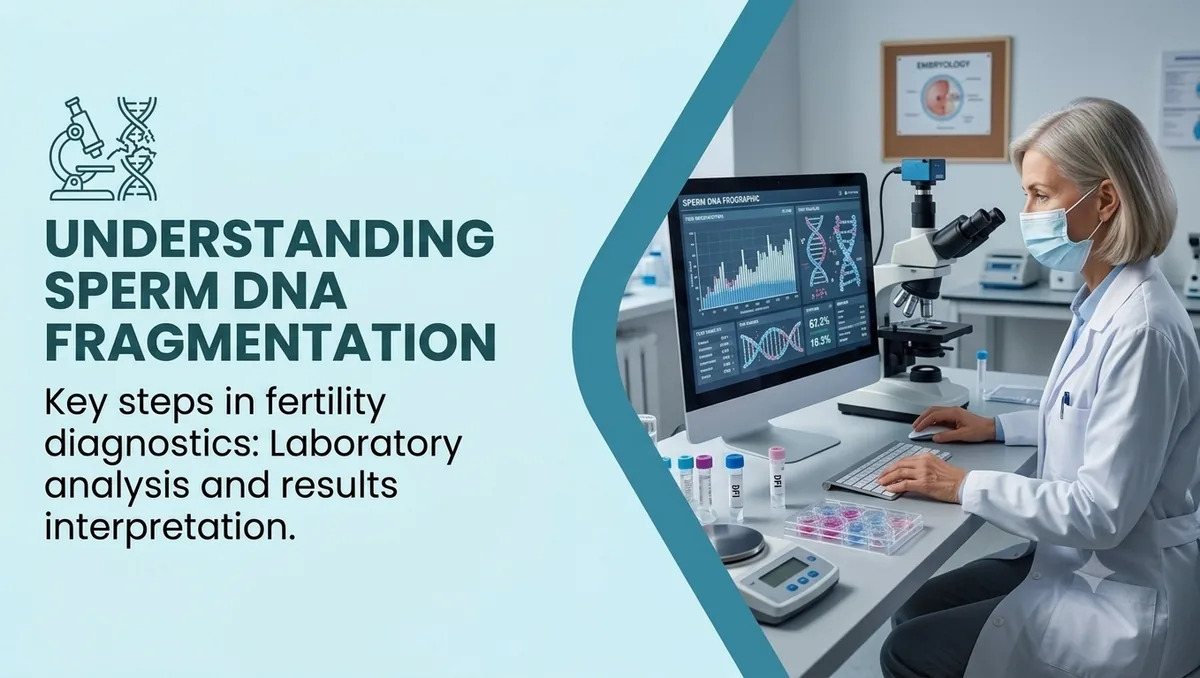
A standard semen analysis can look completely normal — good count, good motility, good shape — and a couple can still struggle to conceive or face repeated IVF/ICSI failures or miscarriages. In some of these cases, the missing piece is sperm DNA fragmentation, a test that looks beyond the numbers a routine semen analysis measures.
Sperm DNA fragmentation refers to breaks or damage in the genetic material (DNA) carried inside the sperm head. A standard semen analysis checks count, motility, and shape, but doesn’t assess the integrity of the DNA itself — a sperm can look completely normal under the microscope and still carry damaged DNA.
High levels of fragmentation can affect:
- Natural conception rates
- Embryo development after fertilization
- IVF and ICSI success rates
- Risk of early miscarriage
- Oxidative stress — an imbalance between harmful free radicals and the body’s antioxidant defences, often the leading contributor
- Varicocele — linked to increased oxidative stress in the testicles
- Infections in the reproductive tract
- Smoking, alcohol, and recreational drug use
- Advanced paternal age
- Heat exposure and environmental toxins
- Prolonged abstinence before semen collection, in some cases
Sperm DNA fragmentation testing isn’t part of a routine fertility work-up. It’s usually recommended when:
- Semen analysis is normal but the couple has unexplained infertility
- There have been repeated IVF or ICSI failures despite good-quality embryos being transferred
- There is a history of recurrent miscarriage
- The man has a varicocele, is a smoker, or has significant oxidative stress risk factors
- Advanced paternal age is a factor
The test is performed on a semen sample using specialised laboratory techniques (such as the Sperm Chromatin Structure Assay or TUNEL assay) that measure the percentage of sperm with fragmented DNA — reported as a DNA Fragmentation Index (DFI). A lower DFI percentage is more favourable; higher percentages are associated with reduced natural conception and IVF success.
Sperm DNA fragmentation testing is most useful as a targeted, second-line test — not something every man needs, but valuable when standard results don’t explain the full picture.
The approach depends on the underlying cause:
- Antioxidant therapy: Supplements such as vitamin C, vitamin E, CoQ10, and zinc, taken for at least 3 months, may reduce oxidative stress and improve DFI in some men
- Varicocele repair: Where a significant varicocele is present, surgical correction can reduce DNA fragmentation in many cases
- Lifestyle changes: Quitting smoking, reducing alcohol, weight management, and avoiding heat exposure
- Shorter abstinence before sample collection: Some evidence suggests fresher sperm samples may carry less fragmented DNA
- Advanced sperm selection techniques during IVF/ICSI: Certain lab techniques can help embryologists select sperm with better DNA integrity for use in fertilization
- Treating underlying infections, if present
Improvement is generally reassessed after about 3 months, in line with the sperm production cycle.
Can I have a normal semen analysis but still have high DNA fragmentation?
Yes. Sperm count, motility, and shape don’t reflect DNA integrity — a completely normal-looking semen analysis can still have elevated DNA fragmentation.
Does sperm DNA fragmentation always cause infertility?
Not always. Mild elevations may still allow conception, but higher levels are associated with reduced natural pregnancy rates, lower IVF/ICSI success, and higher miscarriage risk.
Can DNA fragmentation be reversed?
Yes, in many cases. Since sperm regenerates every 70–90 days, addressing the underlying cause — oxidative stress, varicocele, lifestyle factors — can improve DFI over a few months.
Who should get a sperm DNA fragmentation test?
It’s generally recommended for unexplained infertility, repeated IVF/ICSI failure, recurrent miscarriage, or known risk factors like varicocele and smoking — not as a routine first test.
Do antioxidant supplements really help?
Several studies support a benefit from antioxidant therapy for oxidative-stress-related DNA fragmentation, though results vary and should be guided by your doctor rather than self-prescribed.
Sperm DNA fragmentation explains some of the fertility puzzles that a routine semen analysis can’t — particularly unexplained infertility, recurrent IVF failure, or repeated miscarriage. When it’s identified, the good news is that it’s often improvable through targeted treatment, lifestyle changes, and, in IVF settings, advanced sperm selection techniques.