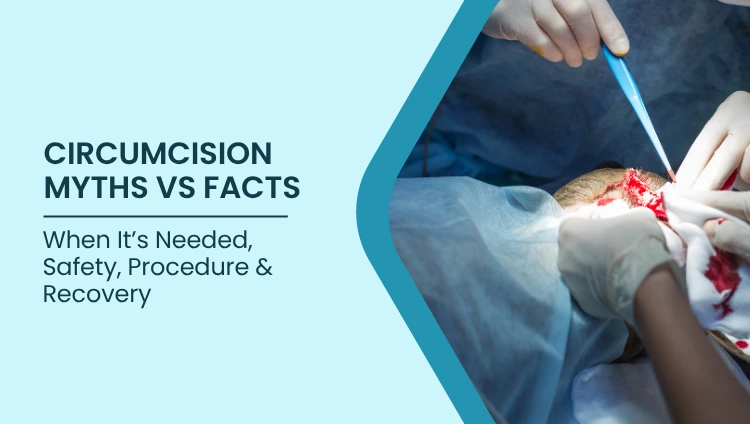
Circumcision is a minor surgical procedure used to treat specific medical conditions affecting the foreskin. While many people associate it only with cultural or religious practices, a large number of adult men undergo circumcision due to symptoms such as tight foreskin, infections, or discomfort during daily activities.
If you are experiencing difficulty retracting the foreskin, pain, or repeated infections, understanding whether circumcision is necessary can help you make an informed decision. This guide explains the facts, clears common myths, and helps you understand when medical treatment is actually required.
Circumcision is a procedure where the foreskin covering the tip of the penis is surgically removed. It is typically performed as a day-care procedure, meaning patients can return home the same day.
- Purpose: Treat conditions like phimosis, infections, or hygiene-related issues
- Duration: Usually 20 to 40 minutes
- Hospital stay: Not required in most cases
- Techniques used: Conventional surgery, laser, or stapler circumcision methods
The procedure is simple, but the decision to undergo it depends on symptoms and medical evaluation.
Circumcision in adults is usually recommended when symptoms interfere with comfort, hygiene, or normal function.
- Phimosis (tight foreskin): Inability to pull back the foreskin
- Pain during urination or intercourse
- Repeated infections: Balanitis or urinary infections
- Swelling, redness, or irritation
- Hygiene difficulties leading to discomfort
Ignoring these symptoms can lead to worsening conditions over time.
Symptoms and treatment decisions vary from person to person. A proper clinical evaluation is essential before deciding the best course of treatment.
Many patients delay treatment due to misinformation. Understanding the facts helps in making timely medical decisions.
- Fact: Adult circumcision is common and medically recommended for conditions like phimosis and recurrent infections.
- Fact: The procedure is performed under anesthesia. Modern techniques significantly reduce pain and discomfort.
- Fact: Most patients experience normal function after recovery. In cases where pain existed earlier, circumcision can improve comfort.
- Fact: It becomes necessary when symptoms such as tight foreskin, infection, or pain persist.
- Fact: Untreated phimosis can lead to infections, difficulty in hygiene, and complications over time.
- Fact: Most individuals recover within 1 to 2 weeks and gradually return to normal activities.
- Fact: It is a safe and commonly performed procedure with minimal risks when done by experienced specialists.
- Fact: Laser circumcision is minimally invasive and often preferred for faster healing and reduced bleeding.
- Fact: Adult circumcision is routinely performed with high success rates.
- Fact: After recovery, most individuals resume normal routines without long-term impact.
Circumcision is usually recommended when symptoms persist despite basic care or non-surgical treatments.
Common signs include:
- Difficulty retracting foreskin
- Pain or discomfort during urination
- Repeated infections or inflammation
- Cracks, bleeding, or swelling
- Difficulty maintaining hygiene
Early consultation helps prevent complications and allows timely treatment.
In early stages, non-surgical options may be considered:
- Topical steroid creams to improve skin flexibility
- Gentle stretching exercises under medical guidance
- Improved hygiene practices
However, when symptoms are severe or recurring, surgery becomes the most effective solution.
Circumcision is performed using safe and standardized techniques:
- Anesthesia: Local or short sedation
- Procedure time: 20–40 minutes
- Techniques available:
- Conventional surgical method
- Laser circumcision
- Stapler technique
Each method is selected based on patient condition and doctor’s recommendation.
Understanding the difference helps in making the right choice.
-
Laser circumcision:
- Less bleeding
- Faster healing
- Minimal tissue damage
-
Traditional method:
- Effective and widely used
- Slightly longer recovery compared to laser
The best option depends on clinical evaluation.
Circumcision is considered a low-risk procedure when performed by experienced urologists.
Possible minor effects include:
- Mild swelling
- Temporary discomfort
- Minor bleeding
Serious complications are rare when proper surgical protocols are followed.
Recovery is generally smooth and predictable.
- Initial days: Mild swelling or discomfort
- Return to work: Within a few days
- Healing time: 1 to 2 weeks
- Complete recovery: 3 to 4 weeks
Following post-surgery care instructions helps in faster healing.
The outcome of circumcision depends on accurate diagnosis, proper technique, and post-operative care.
At Genesiss Multispeciality Hospital, evaluation is focused on identifying the root cause of symptoms before recommending treatment.
Dr. Raju R – Senior Urologist & Andrologist
- Over 20 years of experience in urology and male health
- Specializes in treating foreskin conditions, infections, and urological disorders
- Focus on minimally invasive procedures and patient-specific treatment
Patients often choose experienced specialists for:
- Accurate diagnosis of underlying conditions
- Access to modern surgical techniques
- Safer procedures with better recovery outcomes
Medical consultation is important if you experience:
- Persistent tight foreskin
- Pain during urination or intercourse
- Repeated infections
- Swelling or redness
- Symptoms not improving with basic care
If you are consulting a hospital in Bangalore, especially around BTM Layout or nearby areas, early evaluation can prevent complications and ensure timely treatment.
Is circumcision necessary for everyone?
Circumcision is not required for everyone. It is recommended only when medical conditions such as phimosis, infections, or discomfort are present.
Is circumcision painful?
The procedure is performed under anesthesia, so pain during surgery is minimal. Mild discomfort may occur during recovery.
How long does circumcision take?
Circumcision usually takes around 20 to 40 minutes and is performed as a day-care procedure.
What is the recovery time after circumcision?
Most patients recover within 1 to 2 weeks, with complete healing occurring over a few weeks.
Is laser circumcision better than traditional surgery?
Laser circumcision offers faster healing and less bleeding in many cases, but the choice depends on individual medical condition.
Can adults undergo circumcision safely?
Yes, adult circumcision is safe and commonly performed when done by an experienced urologist.
Circumcision is a safe and effective solution when recommended for the right medical reasons. Understanding the facts helps reduce fear and confusion, allowing patients to make informed decisions. Early consultation, proper diagnosis, and expert care ensure better outcomes and faster recovery.
Taking timely action can prevent complications and improve long-term comfort and health.